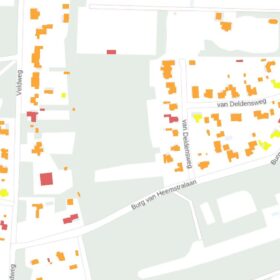
Netherlands identifies 725 km2 of solar-suitable rooftops
The Dutch government, through a new open-access PV database, has discovered that approximately 50% of all rooftops in the Netherlands could potentially host PV systems. However, only 8% of them could immediately accommodate solar arrays without the need for obstacle removal.
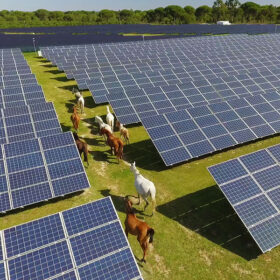
Portuguese utility says renewables covered 91% of demand in March
Redes Energéticas Nacionais (REN), the grid operator in Portugal, says that renewables covered 91% of national electricity demand in March. This marks the third consecutive month in which clean energy has exceeded 80% of total power demand.
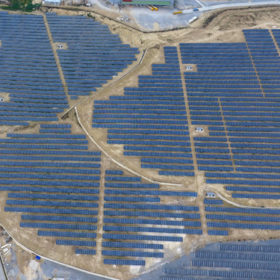
Turkey’s PV fleet surpasses 12 GW
Turkey’s total installed PV capacity reached 12.4 GW at the end of February. Turkish Minister of Energy and Natural Resources Alparslan Bayraktar says the country aims to add 3.5 GW of PV every year through to 2035.
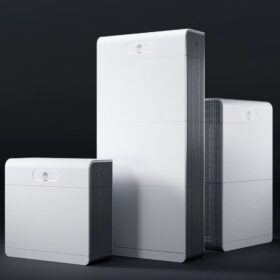
Huawei debuts storage solution for residential PV
Huawei says its new, all-in-one storage solution for residential PV comes in three versions with one, two, or three battery modules, offering 6.9 kWh to 20.7 kWh of usable energy.
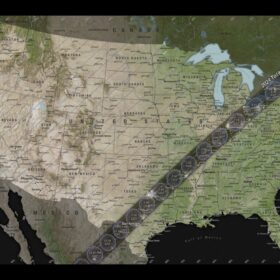
Potential effect of the 2024 solar eclipse on solar energy production
To compensate for potential loss of solar energy flowing to the grid, grid operators will have to be ready to rely on other sources to ensure grid stability, as was done during the 2017 and 2023 eclipse episodes.
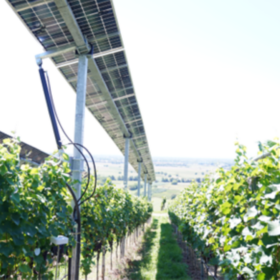
Tracker sensors for agrivoltaics
Sensors from German electronics manufacturer SICK are used in solar PV tracking systems since 2021. Now they are making their way into agrivoltaic applications.
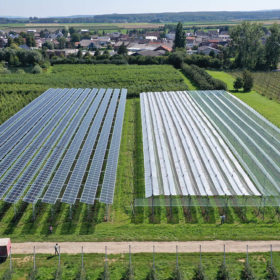
Vast majority of German farmers ready to embrace agrivoltaics
A new survey conducted by Germany’s Fraunhofer ISE showed that 72.4% of the country’s farmers are considering the deployment of an agrivoltaic project. Among the main factors behind this choice, the researchers identified the additional source of income coming from solar power generation and the perceived usefulness of the technology.
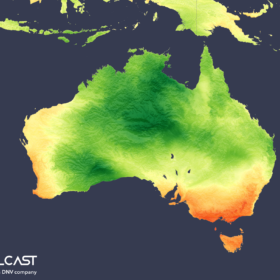
Australian solar evades clouds to perform in March
In a new weekly update for pv magazine, Solcast, a DNV company, reports that Victoria, Tasmania, Western Australia, and New South Wales were over-performing solar regions in March. This overperformance in the southeast and southwest came despite most of the Australian continent seeing below-average irradiance, due to thicker-than-usual clouds over the sparsely-populated interior and tropics.
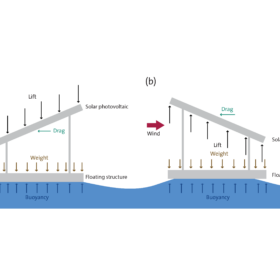
Assessing wind sensitivity of offshore floating solar
Researchers in China have conducted a numerical study on the wind sensitivity of offshore floating solar plants. They have tested six row-arrangements of panels and have found an optimal system configuration that is reportedly less sensitive to wind direction.
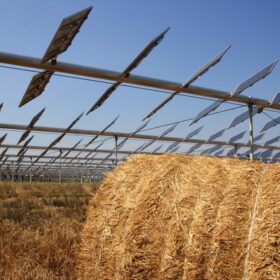
Wheat grows better in agrivoltaic facilities
New research from Italy shows lower wheat production under elevated agrivoltaic systems, but a simultaneous increase in nutritional value for livestock. pv magazine Italy spoke with the academics about their future research.
