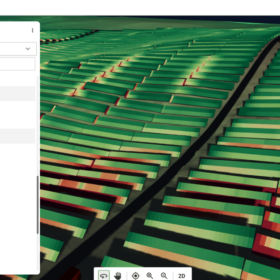
RatedPower enhances solar plant design platform with 3D simulation capabilities
RatedPower has introduced a 3D simulation feature to improve accuracy in utility-scale solar design, enabling more precise yield modeling that reflects terrain variations and shading, validated against real production data.
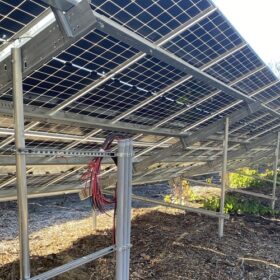
Machine learning-based fault detection technique for bifacial PV
A UAE research team developed a hybrid 1D-CNN and random forest model to detect multiple faults in bifacial PV systems, including dust, shading, aging, and cracks. Using simulated I-V curves and a 180-day synthetic dataset, the model achieved up to 100% accuracy in general state detection and 97.6% in specific fault classification.

France adds 4.2 GW of solar in first nine months of 2025
Statistics from Enedis show that 4.2 GW of solar connected to France’s grid in the January-September period, including 82 MW paired with storage, marking a slight decline from 2024.
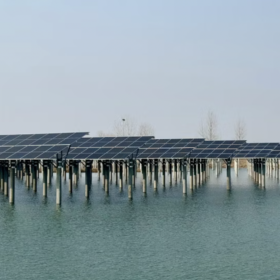
Taiwan to revise environmental impact rules amid floating solar scrutiny
The Taiwanese government has revealed plans to update environmental impact assessment (EIA) standards for solar projects, following storm-related damage to installations and growing public concern over floating PV deployment.
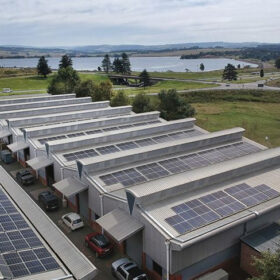
South Africa simplifies registration process for distributed PV
South African utility Eskom is urging consumers with grid-tied rooftop solar to register their systems and integrate them with the national grid, waiving registration fees until March 2026.
Philippines raises FIT levy for renewable payments
The energy regulator of the Philippines has approved an increase in the feed-in tariff allowance (FIT-All) to PHP 0.2073 ($0.004)/kWh from PHP 0.1189, with the new rate set to take effect next month.
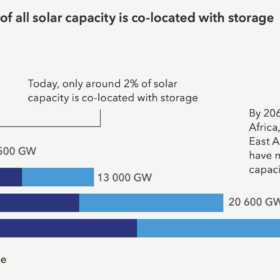
Nearly half of solar capacity will be co-located with storage by 2060, says DNV
DNV’s Energy Transition Outlook 2025 report also predicts that distributed generation solar should begin outpacing utility-scale installations in some parts of the world by 2060. It adds that the levelized cost of electricity for solar is beginning to plateau and is expected to slow to an annual drop below 1% by the 2050s.
Optimizing solar-plus-storage operation for markets with imbalance penalties
Scientists in Japan have used a deep reinforcement learning–based AI model to calculate discrepancies between the planned and actual electricity supply volumes in PV-battery systems operating in markets where grid imbalances are penalized. Through a series of simulations, they found that the proposed methodology can reduce imbalance penalties by approximately 47%.

Romania drafts cybersecurity rules for PV, cogeneration up to 1 MW
Romania plans to amend its energy law to require the National Cybersecurity Directorate (DNSC) to define technical standards for PV and cogeneration systems up to 1 MW, aimed at preventing data breaches and safeguarding grid operations.

Deployable tracker-based rooftop PV system for stadiums
An international research team has developed a tracker-based rooftop PV system that can be installed on both new and existing stadiums. The proposed design reportedly allows for easier deployment and delivers higher power output compared to conventional stadium PV covers.
