
Dutch grid operator expects up to 34 GW of solar by 2030
Under Tennet’s most optimistic outlook, solar generation capacity could more than double the volume of wind farms by the end of the decade, provided the Netherlands goes above and beyond Paris Agreement climate change requirements.
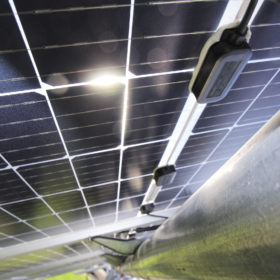
Nextracker unveils new software for solar park monitoring
The U.S. tracker provider has launched NX Navigator, a control system it says offers improved monitoring across a range of weather conditions. The company claims the software enables PV plant operators to schedule maintenance operations such as cleaning and mowing.
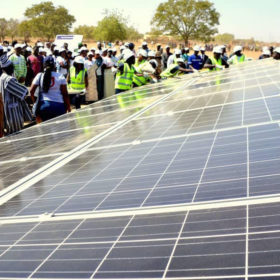
Work begins on 30 MW solar plant in Burkina Faso
Electricity generated by the facility will be sold at $0.08/kWh to national utility Sonabel. Burkina Faso recently adopted a solar-oriented energy policy.

Pakistan Post wants solar
The postal operator, which is present in 12,000 locations nationwide, wants PV facilities to power its operations. Bidders have until February 20 to deliver on a call for expressions of interest and pre-qualify for the tender.

Canadian 400 MWac merchant solar plant secures financing
The project will operate at a profit in part thanks to an emissions scheme introduced by the province of Alberta on January 1. The plant will be able to sell its carbon certificates.
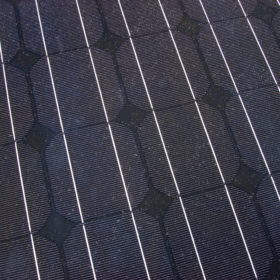
Predicting solar power generation with ‘deep photovoltaic nowcasting’
The ‘deep photovoltaic nowcasting’ project developed by Chile’s Institute of Engineering Sciences of the University of O’Higgins, Canada’s Laval University and Japan’s Kyoto University, seeks to make short-term, high-resolution projections of solar energy generation.
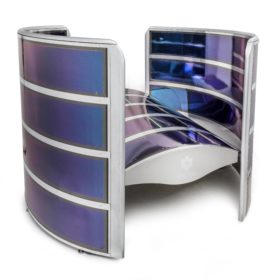
UK designers launch freestanding curved panel
Product development company the Cambridge Design Partnership, working with compatriot solar business Solivus, has developed a curved solar module featuring an organic thin film. The design is based on Solivus’ desire to “create a product so attractive that people would be happy to have one in their garden”.

Bangladesh prepares to tender solar rooftops on public buildings
The government will reportedly be ready to tender contracts to install rooftop PV on its buildings across eight divisions of the nation in as little as three months’ time.
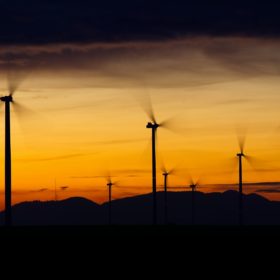
Varying capital costs favor wind over solar in Europe
Differing finance costs across the continent are likely to see wind-rich, high electricity demand nations such as Germany, France, Austria and Belgium forge ahead with renewables at the expense of countries with plenty of sun but where borrowing is expensive, according to a German study.

India concludes world’s largest renewables-plus-storage tender at $0.0566595/kWh
Pumped hydro and battery projects, coupled with renewables, offer the world’s lowest peak clean electricity tariff. The tender, which received bids for for 1.62 GW of capacity against the 1.2 GW sought, saw Greenko secure 900 MW of pumped storage capacity and Renew Power 300 MW of battery storage.
