Chinese PV Industry Brief: Cumulative PV capacity tops 260 GW
Furthermore, Aikosolar is seeking funds to build two solar cell factories totaling 16.5 GW, and China Huaneng Group (CHN) wants to deploy a 2 GW plant including agrivoltaics, floating PV and solar facilities built on fishponds.
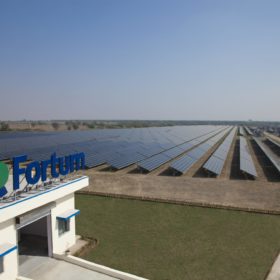
Fortum to sell off 500 MW of India solar assets to Actis
The Finnish utility, which works primarily on a build-operate-transfer model in India, has signed an agreement to divest its 250 MW solar plant in Karnataka and 250 MW in Rajasthan to UK investor Actis. The transaction is valued at approximately €280 million and will enable Fortum to invest in building new projects.
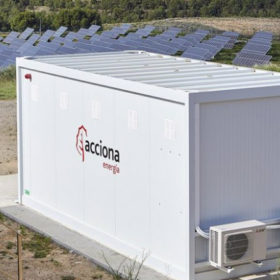
Storing solar power with recycled batteries from Nissan
Acciona is testing four second-life batteries with a combined capacity of 130 kWh at its 1.2 MW experimental solar park in Tudela, in the Spanish region of Navarra.
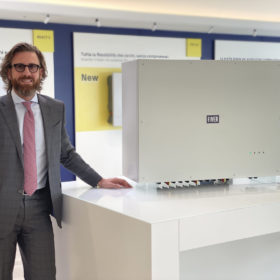
Fimer launches two new inverters for large scale projects
The Italian manufacturer has showcased a high-power multi-MPPT string inverter and modular conversion solution – designed to supply both decentralized and centralized systems.

New microinverter from the US
Yotta Energy’s new micro-inverter is claimed to be an ideal solution for commercial rooftop PV systems linked to between 500 kWh and 1 MWh of storage. The device has a peak efficiency of 96.5% and a nominal maximum power point tracking (MPPT) efficiency of 99.5%.
The Hydrogen Stream: Off-grid hydrogen power solution based on alkaline fuel cell from Israel, first green hydrogen production in Russia
Israel-based GenCell has unveiled an off-grid hydrogen power solution based on alkaline fuel cell (AFC) technology. Italian energy giant Enel and Russian technology company Rusnano want to set up Russia’s first green-hydrogen production project at a wind farm in the Murmansk region.
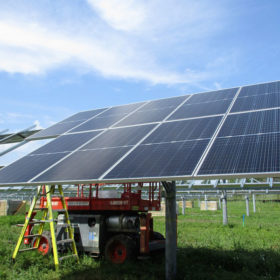
Quebec’s first solar plants come online
State-owned utility Hydro-Quebec has deployed its first 10 MW of ground-mounted solar to test the technology at the province’s latitude.
‘New solar will be cheaper than existing conventional power stations in Germany this year’
With forecasters predicting the carbon price will top €100 per ton by 2030, the latest edition of a Fraunhofer ISE study into electricity generation costs has painted the renewables-versus-fossil fuels conundrum as something of a no-brainer.
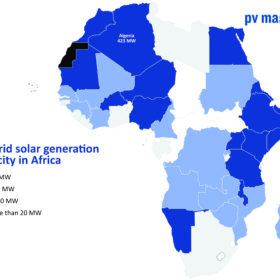
Rockefeller and Ikea foundations pledge $1bn for small scale renewables
With ‘shovel-ready’ projects across India, Africa and Latin America in line for a mix of grants, cheap loans, equity investment and financial guarantees from this year, the two bodies hope to trigger $20 billion in total funding and bring reliable power to a billion people.
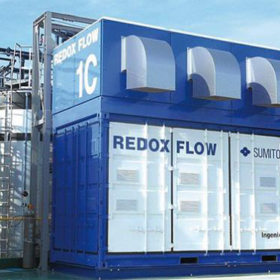
Malaysian green hydrogen project opts for Perth-based flow batteries
Australia-based TNG Limited has signed an agreement with Malaysian green hydrogen company AGV Energy which will see its vanadium redox flow batteries integrated into the HySustain project to store solar energy for green hydrogen production.
