
New multi‑hotspot detection tech based on Lab* feature descriptor
A Husqvarna researcher developed a fast, interpretable PV hotspot-detection method using IR thermography and Lab* color-space features instead of heavy neural networks, achieving up to 95.2% accuracy with shallow classifiers. The lightweight system works in real time on drones or edge devices and could save 17,620 kWh and 8.9 tons of CO₂ annually by improving fault detection in solar panels.
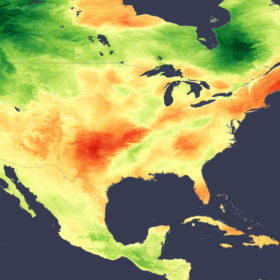
La Niña Ridge drives December solar gains across U.S. Southwest
In a new weekly update for pv magazine, Solcast, a DNV company, reports that December’s solar resource reflected a classic La Niña pattern, with suppressed irradiance in the Pacific Northwest and above-normal conditions across the southern U.S. A blocking ridge brought clear skies and strong solar gains to the Southwest and Texas, while cloud cover and fog reduced output farther north.

Spanish startup develops BIPV systems for tunnel exits, entrances
Spain-based Izpitek has developed an 86 kW building-integrated photovoltaics (BIPV) installation for tunnel entrances and exits that supplies power for lighting, demonstrating how solar energy can be adapted to complex architectural environments.
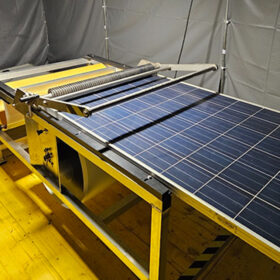
French startup offers on-site solar module repair solution
France-based DOTSun has developed an on-site repair solution for solar panels with degraded backsheets, compatible with PA, PVDF, and PET types. The system uses a compact laminator to apply a protective film to the rear side of the module, reportedly restoring insulation and extending the service life of up to 2,000 panels per site.
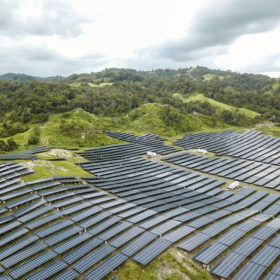
Grid code standards key to unlock Indonesia’s solar potential
New research shows how modern technical standards, combined with broader regulatory and grid reforms, are essential to ensure system reliability in the Indonesian electricity system as renewable capacity grows.

Peru adds 454 MW of large-scale PV in 2025
Peru commissioned about 454 MW of utility-scale solar capacity in 2025, taking cumulative installed PV capacity to roughly 952 MW, according to the government.

Semi-transparent photovoltaics cost-competitive only up to 50% transparency
Researchers from Spain found that semi-transparent PV systems are commercially viable only up to about 50% transparency, as higher transparency sharply reduces efficiency and increases system costs. Their analysis shows that declining power density, and not balance-of-system or financing factors, is the main driver of higher LCOE, even in high-irradiation regions.

Germany adds 17.5 GW of solar in 2025
Germany installed about 17.5 GW of new PV capacity in 2025, taking cumulative installations past 117 GW by year end, according to preliminary data from the German Solar Association.
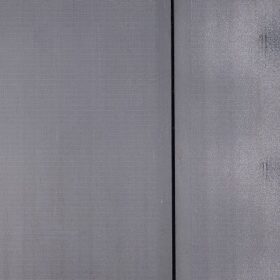
ML System unveils solar facade panels, roof-integrated PV tiles
The Poland-based module manufacturer has developed Photonwall, a building integrated solution for ventilated façades. It also offers Photonroof, a ceramic PV roof tile solution. Both BIPV products are available in colors and finishes that match the aesthetics of modern and historic buildings.

Mibet releases mounting system for flat-roof PV installations
The Chinese company said its novel Z-type mounting supports installation angles of 5°, 10°, and 15° and withstands wind speeds up to 45 m/s. It claims a lifespan of more than 25 years.
