
Chinese PV Industry Brief: Huadian kicks off 2 GW tender
Also, a court in Beijing is now reviewing an application for bankruptcy filed by a unit of Hanergy. In other developments this week, a diverse range of solar industry players launched the 600W+ Photovoltaic Open Innovation Ecological Alliance.
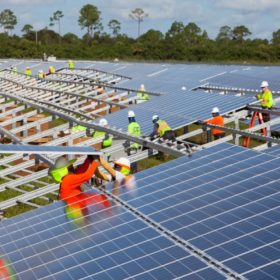
US installed more solar in Q1 2020 than ever before
The record-setting quarter was driven by nearly 2 GW of utility-scale solar, supplemented by another 1.6 GW of residential capacity. And while the pandemic will slow the industry in 2020, five-year projections are strong, especially for Texas.

Chinese-made HJT hitting Australian rooftops
Risen Australia and distributor One Stop Warehouse signed an expanded 150 MW distribution deal last week, marking the Chinese manufacturer’s latest attempt to expand in the rooftop segment. With Risen’s new heterojunction module, the 415-435 W Sieger, now moving into mass production, One Stop Warehouse’s Leo Ye welcomed the “new, fresh” tech.

Sunrun to acquire Vivint Solar for $3.2bn in all-stock transaction
The new, bigger Sunrun will have 500,000 customers and more than 3 GW of solar power assets. Is there value in scale in residential solar?

India will add just 50 GW of solar in the next five years, according to company bosses
The expected return would leave the nation woefully short of its ambitious 175 GW clean energy target, which was laid down with a 2022 deadline. Chief executives who criticized aggressive clean power auctions said they would like to see more fossil fuel facilities thrown into the mix.
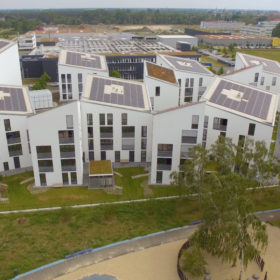
Panasonic unveils first smart city in Berlin
A new project in the German capital combines a range of intelligent energy solutions, including PV systems, storage tanks, and air-to-water heat pumps integrated into an efficient energy management system.
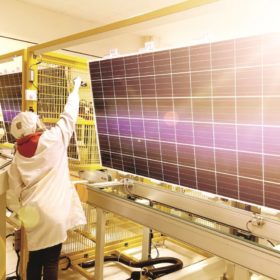
Chinese PV Industry Brief: Canadian Solar joins 500 W+ club, Trina to supply nearly 1 GW
Canadian Solar has unveiled its newest line of PV modules, with maximum power ratings of up to 590 W. Trina Solar, meanwhile, has signed a deal to supply PV modules for almost 1 GW of capacity throughout the world.

Covid-19 weekly round-up: Module prices fall as big solar starts to recover in Germany
Plus, there is hope of a bright new dawn with proposed legislative changes in Europe and the U.S. even as the solar equipment industry hits new lows and cyber attacks reportedly increase in frequency.
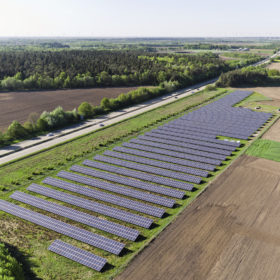
Easing of Covid lockdown helped German big solar in May
The nation added a year-high of almost 450 MW of new capacity during the month to take the five-month total for 2020 to 1,926 MW. The solar subsidy will fall another 1.4% from tomorrow.

Q Cells, Enphase launch AC module
The module manufacturer and micro-inverter supplier will connect their products in the factory to reduce installation costs, while providing a list of value propositions for micro-inverters.
