
Building-integrated concentrating photovoltaics for vertical applications
An Indian-British research team has developed a building-integrated linear concentrating PV facade by sandwiching an asymmetric compound parabolic concentrator, PERC cells, and encapsulation layers between two sheets of glass. The system was tested under both indoor and outdoor conditions and its payback period was found to be of up to 11 years.
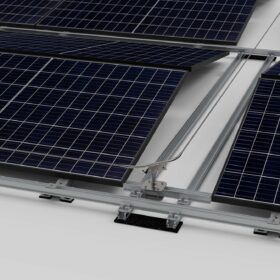
Smartvolt adds rooftop lightning protection to pre-assembled mounting system
The Swiss mounting system manufacturer has added new safety features to its pre-assembled, foldable SmartSolarBox solution for flat roofs and temporary sites, as well as support for larger 600 W modules.
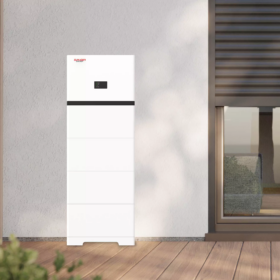
Sunwoda Energy unveils 40 kWh storage system for homes, businesses
Chinese manufacturer Sunwoda Energy introduced a modular all-in-one energy storage system with up to 40 kWh capacity and 30 kW output for residential and small commercial use.

Brazil opens consultation on nationwide smart meter deployment
Brazil’s Ministry of Mines and Energy (MME) has launched a consultation that could lead to the installation of 3.6 million smart meters as part of efforts to modernize the power sector and cut losses.
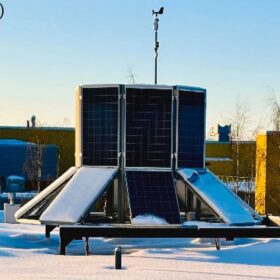
Carousel-shaped measurement platform for Arctic PV
Scientists in Finland have created a special platform to assess the performance of PV modules operating under Arctic conditions. Specifically, it provides data for efficient system design and performance modelling validation, with azimuth and tilt angle being key parameters.
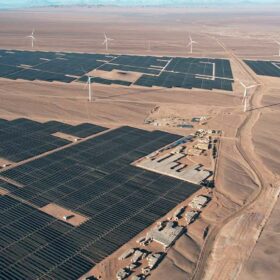
Chile’s PV capacity tops 11.27 GW
Chile reached 11.27 GW of PV in August 2025, with solar accounting for 60% of its renewable capacity.
New control strategy for grid-forming inverters
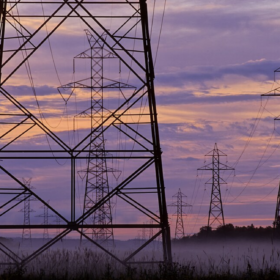
Researchers in the United States have created a droop control strategy for grid-forming inverters that purportedly improves power system frequency stability. By using an exponential active power–frequency relationship, the novel technique optimizes the use of available headroom, reduces frequency deviations, and enhances overall grid resilience.
European electricity spot market shifts to 15-minute trading blocks
The European Power Exchange (Epex Spot) will switch its day-ahead market from hourly to 15-minute intervals on Sept. 30, a change mandated by the European Union that is expected to improve solar and wind integration, boost battery trading opportunities, and support dynamic tariffs.
Key takeaways from Solar & Storage Live UK
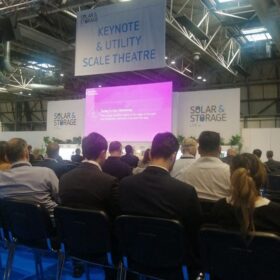
Solar & Storage Live UK 2025 took place over three days from September 23 to 25 at the NEC venue in the outskirts of Birmingham, the UK’s second largest city. pv magazine spoke to hundreds of industry players keen to optimize existing solar and storage capacity and be at the forefront of the nationwide rooftop PV expansion.
Zombie apocalypse-ready solar-plus-storage kit
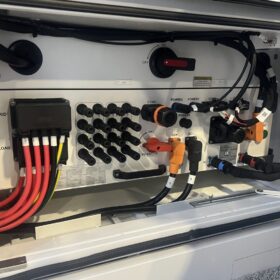
JDEnergy introduced its eBlock 100C, eStation MV-6880, combined control systems, and the milestone deployment of its 20,000th energy storage block.
