
Danish startup launches solar tile for pitched roofs
Solartag has developed a 71 W solar tile with a weight 14.2 kg/m² and a power conversion efficiency of 16%. The new product relies on black PERC cells and is standardized for mass production, according to the manufacturer.
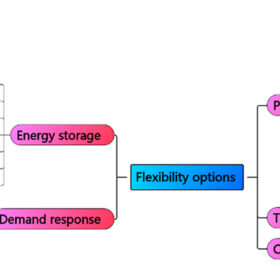
Flexibility options are a central concept for highly renewable energy systems research
To address the variability of renewable energy for a stable supply, 22 distinct types of flexibility options are found in 100% renewable energy systems research articles, categorized into power-to-X, energy storage, demand response, transmission and distribution grids, and curtailment.

pv magazine Focus: Manufacturers, installers, scientists discuss EMS
Installers, manufacturers, scientists and users at the Smarter E Europe event – held last week in Munich, Germany – discussed PV home storage, energy management systems (EMS), and key challenges in the implementation of Germany’s new solar provisions.

New method to optimize bifacial PV system performance in residential applications
Scientists in Qatar have outlined a new approach to optimize residential bifacial PV systems by combining south-facing and vertically mounted east-facing configurations. The novel methodology reportedly results in a 21.6% increase in a system’s net present value.

pv magazine Focus: As storage scales, co-located solar projects must adapt
At pv magazine’s Focus event at Intersolar Europe this week, moderated by ESS News Editor Marija Maisch, the panelists discussed co-location and financing, alongside forward-looking presentations on market trends.
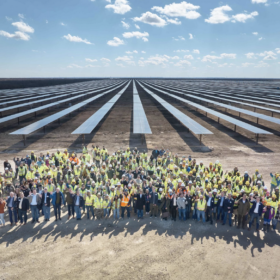
Watershed moment for Texas solar
As Texas suddenly finds itself a leader in both solar deployment and manufacturing, debate in the state legislature and US Congress could shape how much the Lone Star State once again will shape the nation’s energy trajectory.
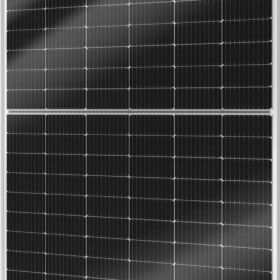
Sunport Power unveils lightweight n-type glass module with 22.5% efficiency
The Chinese manufacturer told pv magazine that high production costs and low module prices influenced its decision to change its well-known metal wrap through (MWT) technology out for mass produced n-type technology for its latest product.

Eturnity adds more PV design automation, energy system project control to its software
Additional project management and design automation tools are available on the Swiss software company’s subscription-based platform made for small and medium-sized (SME) businesses that are targeting commercial and industrial (C&I) and residential the solar PV segments.

‘Blaming renewables for Spain’s blackout is like faulting the thermometer for the fever’
The recent blackout in the Iberian grid should not be interpreted as failure of renewables. But it did provide Europe with a sign the energy system is changing, shedding light on the necessity to govern 21st-century technologies with 21st-century control systems.

Atmoce launches retrofit-ready home battery
The Netherlands-based manufacturer is targeting older home PV arrays with its M-ELV product, which does not require replacement of solar inverters.
