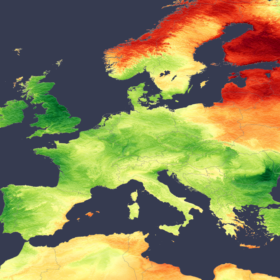
Cold, clear skies boost northeastern Europe’s solar while storms dim the west
In a new weekly update for pv magazine, Solcast, a DNV company, reports that February saw a sharp divide in Europe’s solar conditions. Northeastern regions experienced clear, cold weather with irradiance 20% above average, while western and southern Europe endured persistent storms and widespread irradiance deficits.

Bahrain reveals qualified bidders for 100 MW BAJ Solar IPP project
The Bilaj Al Jazayer Independent Power Project will be developed under a public-private partnership on a build-own-operate basis.

Increased spacing between solar module rows boosts agrivoltaics viability
U.S. researchers developed a framework showing that wider spacing between solar PV rows can make agrivoltaic systems economically viable for large-scale mechanized farming. Their simulations in Colorado demonstrated that optimized row spacing maintains crop production while improving combined agricultural and energy revenues.
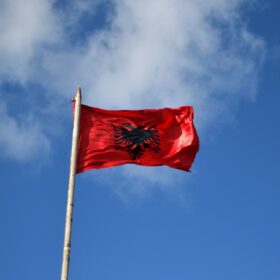
Albania adds over 180 MW of solar in 2025
Albania’s cumulative solar capacity now likely stands between 600 MW and 650 MW, with installations to date led by the utility-scale segment and growing interest from the C&I market.
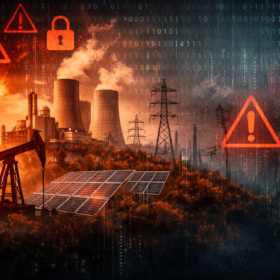
All 2022–2024 cyberattacks on energy infrastructure at a glance
A new global dataset of 119 energy-sector cyber incidents from 2022–2024 shows EU and BRICS countries, followed by the US, are most affected. Attacks targeted power, oil, gas, and nuclear infrastructure, driven by both financial and political motives, with diverse threat actors involved.

Japan establishes national benchmarks for agrivoltaics as sites expand
The Japanese government has defined new standards for agrivoltaics as regulators begin tightening oversight in response to nearly one-quarter of projects reporting reduced crop yields or sub-standard cultivation beneath solar panels.

Toshiba rolls out AI-powered solar plant portfolio management platform
Toshiba has unveiled a PV management platform within its Spinex for Energy portfolio that enables real-time monitoring and O&M of multiple solar plants.
The system uses AI to track plant performance, detect faults, calculate capacity and PR metrics, automate reporting, and support troubleshooting.
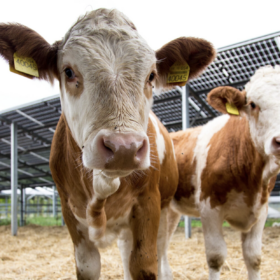
Research shows conventional solar arrays can support livestock grazing
Conventional solar parks can support sheep and cattle grazing because vegetation under and between PV modules provides adequate feed quality, according to a new research report that analyzes five installations in Germany.

Russia adds around 100 MW of solar in 2025
GlobalData says Russia added an estimated 100 MW of solar last year, taking total installed solar to around 3.1 GW. The consultancy is forecasting annual additions of about 200 MW over the next ten years, taking the country’s cumulative solar capacity to 5.3 GW by 2035.
New simulation platform lets energy operators train against realistic cyberattacks
Researchers at Germany’s Fraunhofer FKIE institute developed PowerRange, a virtual simulation platform that helps power grid operators safely test cybersecurity measures and respond to realistic cyberattacks. The platform supports both traditional and renewable grids, offering immersive training across IT, OT, and control systems while highlighting the importance of coordination, communication, and practical defense strategies.
