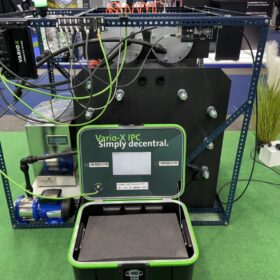
Táctica Industrial unveils off-grid PV system for modular green hydrogen
Spanish renewables specialist Táctica Industrial says its off-grid photovoltaic system produces green hydrogen at about €400 ($470)/kW using modular alkaline electrolysis without inverters or grid connection.

Interspace single-axis agrivoltaics has lowest environmental impact in Europe
A group of scientists has simulated fixed vertical, interspace and overhead single-axis as well as overhead dual-axis agrivoltaic systems for 30 years and has found interspace single-axis system emerged as the most environmentally favorable configuration in Europe.
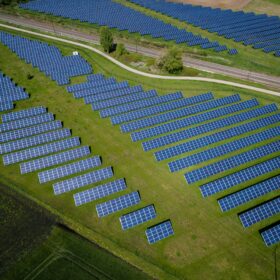
Italy assigns 1.1 GW in PV auction open to projects with ‘non-Chinese’ modules
The procurement exercise, the second solar auction under Italy’s Fer X incentive scheme and first to exclude the use of Chinese solar modules, cells and inverters for projects above 1 MW in size, concluded with a final average price of €0.06637/kWh.

Türkiye publishes rules for floating solar
Türkiye has published a regulatory framework covering the legal basis for developing floating solar plants on reservoirs and dams. The rules establish where floating solar can and cannot be built and how projects can be approved.
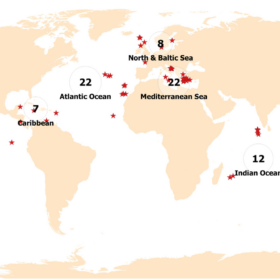
Small islands, big impact: the role of solar PV for the tropics
Low-cost renewables provide an opportunity for tropical islands to drive a sustainable, secure and self-sufficient economy. Solar PV emerges as the bulk energy provider, driven by excellent resource conditions and fast-improving economic attractiveness. The anticipated momentum of solar PV in tropical islands can best be characterised as a Solar-to-X Economy.

Solar surge in Northern India as Cyclone Ditwah cuts irradiance in the south and Sri Lanka
In a new weekly update for pv magazine, Solcast, a DNV company, reports that November brought above-average solar conditions in northern India and Pakistan, while southeastern India and Sri Lanka faced reduced solar output due to Cyclone Ditwah’s storms and heavy cloud cover. Despite southern disruptions, India’s renewable energy share rose, driven by strong solar generation in the north and overall growth in renewable capacity.
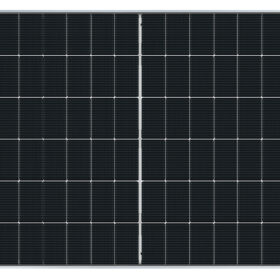
Astronergy launches 750 W anti-dust TOPCon solar module
The Chinese manufacturer said its new Astro 7 TOPCon module features an innovative self-cleaning frame and a power conversion efficiency of 23.2%.

How technology is changing modern solar O&M
The speed at which Europe’s PV buildout has taken place over the last few decades is creating challenges for the solar industry around utility-scale O&M, as attendees of pv magazine’s Week Europe virtual conference session on leveraging technology for O&M heard.
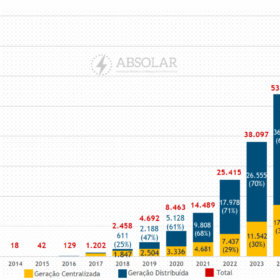
Brazil to add 11.4 GW of solar in 2025 despite regulatory hurdles
Brazilian photovoltaic association ABSolar says solar capacity additions may fall 24% to 10.6 GW in 2026 from 15 GW in 2024, with regulatory barriers, high capital costs, and restricted self‑generation access slowing investment and reducing jobs.

Bangladesh reinstates 11 solar plants totaling 918 MW after tariff cuts
Bangladesh reinstated approvals for 11 solar plants with a combined capacity of 918 MW after developers agreed to lower tariffs, in a move expected to save the government BDT 11.69 billion ($96.2 million) per year.
