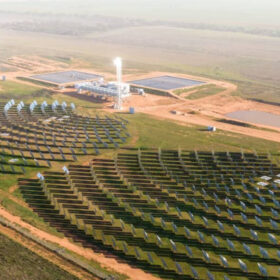
Australian utility aquires CSP-storage project from Photon Energy
AGL Energy has bought the 150 MW solar, 90 MW thermal, and 720 MWh storage Yadnarie Project from Dutch developer Photon Energy, following the award of development approval in June.
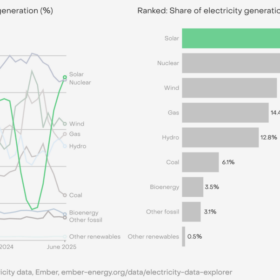
Solar becomes EU’s largest power source in June
Solar accounted for 22.1% of electricity generation in the European Union in June, as 13 member states set new records for the share of solar in their national power mixes.
Assessing PV cell, module reliability via Arrhenius equation
Researchers in Portugal have used the so-called Arrhenius aging model to measure the temperature behaviour and reliability of different solar modules. Their analysis showed that long-term module performance can diverge significantly depending on the manufacturing processes.

High-pressure systems boost global solar irradiance in early 2025
In a new weekly update for pv magazine, Solcast, a DNV company, reports that the first half of 2025 has delivered favourable solar conditions across several key solar generation regions around the globe, with many population centres experiencing above-average irradiance.
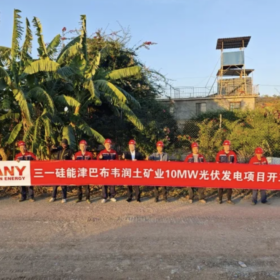
Zimbabwe starts construction on 10 MW solar plant
China’s Sany Silicon Energy is building its first solar plant in Zimbabwe. The project uses the company’s EP+F business model combining engineering, procurement and financing.
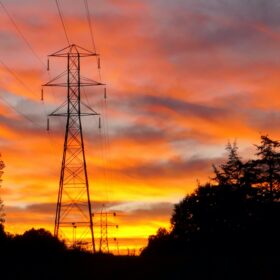
Dexter Energy adds battery support to forecasting, PV power optimization platform
The Dutch company says its short-term trading solutions for solar and other renewable energy technologies, supports grid balancing, reduces the costs of imbalance, and optimizes energy flows in an “increasingly volatile” energy market. It is growing internationally, and expanding its support of battery-related trading.
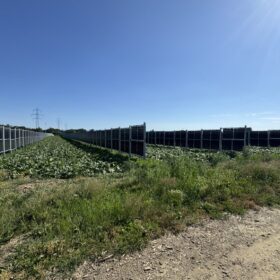
A closer look at vertical agrivoltaics
pv magazine visited a 1.9 MW agrivoltaic plant in Austria where pumpkins and soy are cultivated beneath vertically mounted PV structures supplied by Next2Sun.

Poland added 637 MW of solar during Q1
Poland’s solar capacity neared 22 GW at the end of March, according to figures from the country’s Institute of Renewable Energy. There are currently 532 solar projects with a capacity equalling 950 MW with valid building permits.
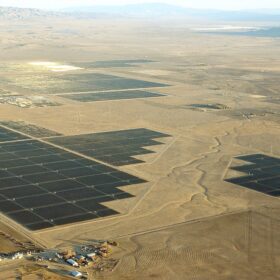
Solar becomes top source of electricity in California
Over the past 12 months, solar power has become California’s largest source of electricity, a trend likely to continue.

Cayman Islands qualifies six bidders for 22.5 MW solar-plus-storage tender
A request for proposals from six qualified bidders interested in developing a 22.5 MW solar-plus-battery project is now live in the Cayman Islands. The project will be the islands’ largest solar site to date and first to integrate battery storage.
