Dexter Energy adds battery support to forecasting, PV power optimization platform
The Dutch company says its short-term trading solutions for solar and other renewable energy technologies, supports grid balancing, reduces the costs of imbalance, and optimizes energy flows in an “increasingly volatile” energy market. It is growing internationally, and expanding its support of battery-related trading.
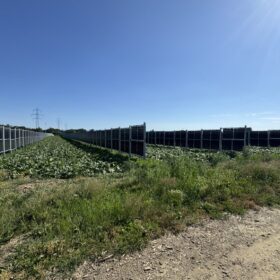
A closer look at vertical agrivoltaics
pv magazine visited a 1.9 MW agrivoltaic plant in Austria where pumpkins and soy are cultivated beneath vertically mounted PV structures supplied by Next2Sun.

Poland added 637 MW of solar during Q1
Poland’s solar capacity neared 22 GW at the end of March, according to figures from the country’s Institute of Renewable Energy. There are currently 532 solar projects with a capacity equalling 950 MW with valid building permits.
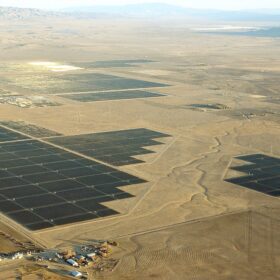
Solar becomes top source of electricity in California
Over the past 12 months, solar power has become California’s largest source of electricity, a trend likely to continue.

Cayman Islands qualifies six bidders for 22.5 MW solar-plus-storage tender
A request for proposals from six qualified bidders interested in developing a 22.5 MW solar-plus-battery project is now live in the Cayman Islands. The project will be the islands’ largest solar site to date and first to integrate battery storage.

Four-year outdoor testing shows perovskite solar cells suffer from high seasonality
Testing conducted by the Helmholtz-Zentrum Berlin (HZB) in Germany has shown that perovskite solar cells operating at high latitudes in Europe may suffer from higher performance losses in winter compared to conventional PV devices. The scientists warned, however, that at lower latitudes this seasonality may be less pronounced.

China on track to deploy 380 GW of PV in 2025
China is set to break new ground in its energy transition, with 2025 renewable capacity additions projected to exceed 500 GW, driven by surging solar and wind deployment, according to a new report from the State Grid Energy Research Institute.

Massive solar project progresses ahead of schedule in Philippines
More than half of the first phase of the 3.5 GW solar and 4.5 GWh battery storage MTerra Solar project in the Philippines is now complete, eight months after its groundbreaking. The 778 MW of solar installed so far makes it the largest solar installation in the country.

New PV system sizing approach based on jellyfish search algorithm
Researchers have used the jellyfish search algorithm to optimize solar PV distributed generation placement and sizing. They have tested the algorithm on an IEEE 33-bus system, with one, two, or three PV deployment scenarios, and compared its performance with that of a dozen of competing optimization techniques.
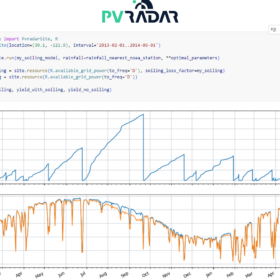
PVRadar launches Python programming tool to ease site-specific loss modeling
German software company PVRadar Labs has released a Python programming package for solar asset owners and engineers that want to build site-specific models.
