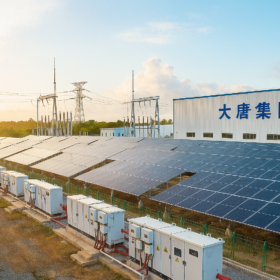
China’s Datang launches testing facility for PV with 2,000 V system voltage
China Datang Corp. says its 2,000 V solar testing base in China’s Hainan province will validate high-voltage modules under tropical coastal conditions.

REC leads US residential solar panels as Tesla loses storage share
REC led the US residential solar panel market in the first half of 2025, while Tesla lost share in home batteries and inverters amid supply and policy pressures, according to EnergySage.

‘Preaching to the unconverted’ – EUPVSEC 2025 kicks off in Bilbao
The annual European Photovoltaic Solar Energy Conference (EU PVSEC) got underway today, this year in Bilbao. Conversations on the first morning focused on the need for strong policy support across multiple areas of renewable energy. While the week is sure to be filled with new ideas on the technological side, it’s clear that ensuring policies to support further growth in renewable energy is a growing challenge. Those working in the solar industry and research community need to reach a wider audience, and one that may not be as easy to convince.

Chinese PV Industry Brief: Inverter manufacturers report solid H1 results
Sungrow, Ginlong Solis, GoodWe and Deye all posted higher first-half revenue in 2025, with Sungrow leading on storage growth and Deye delivering the strongest margins.

SolarEdge unveils all-in-one residential inverter and clickable modular battery system
The stackable battery ranges 4.9 kWh to 19.6 kWh per unit while the inverter is available in ranges from 3.8 kW to 13 kW. The company also introduced a meter socket adapter to avoid triggering costly main panel upgrades.

Polycab launches 350 kW string inverter for utility-scale solar projects
Polycab has launched its UT Series 350 kW three-phase string inverter for utility-scale solar projects in southern India. The series offers 15/12 maximum power point trackers (MPPTs) and supports bifacial 182 mm/210 mm modules with a maximum 15 A/20 A DC input current per string.
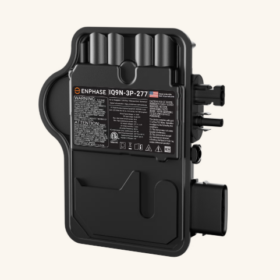
Enphase introduces 97.5%-efficient microinverter based on gallium nitride tech
The inverter is designed for three-phase grid configurations without using external transformers. It contains gallium nitride technology, a first for Enphase’s microinverters.

Dow releases new silicone gel for high voltage PV
The company said that its Dowsil EG-4175 Silicone Gel resists temperatures of up to 180 C in next-generation IGBT modules used in inverters.

S&P Global unveils 2025 Tier 1 module, inverter, battery supplier list
S&P Global’s first 2025 Tier 1 Cleantech Companies list ranks 63 solar, wind, inverter, and battery suppliers by technology, financial health, and sustainability to guide investors and developers.
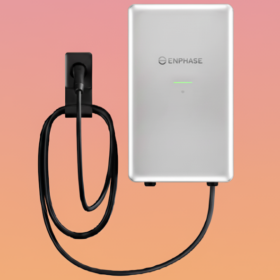
Enphase presents bidirectional EV charger
The microinverter company has disclosed details on the architecture of its IQ Bidirectional EV Charger, which will be available for sale in the second half of 2026. It is reportedly able to deliver up to 11.5 kW of bidirectional power.
