
How to generate hydrogen at home with recycled solar panels
Scientists in Chile have developed a low-cost, easy-to-deploy hydrogen system powered by end-of-life solar panels. The residential solution reportedly achieves a levelized cost of hydrogen of approximately $5.8/kg.

Atmoce debuts microinverter connecting two solar modules
Atmoce’s new MI microinverter series connects two PV modules per unit while still providing module-level power optimization.

India adds heterojunction cell tech to approved solar manufacturers list
Reliance Industries Ltd has become the first company to secure the inclusion of heterojunction solar cells in the Approved List of Models and Manufacturers (ALMM) published by India’s Ministry of New and Renewable Energy.
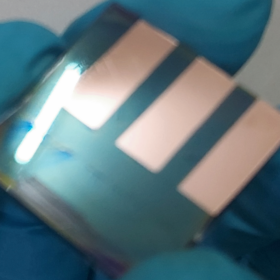
Reduced graphene oxide boosts stability in perovskite solar modules
Indian scientists have fabricated perovskite mini-modules with reduced graphene oxide interface engineering, achieving 16.6% efficiency and over 1,300 hours of stable operation. The graphene oxide layer improves film quality, reduces defects, enhances charge transport, and enables scalable fabrication, offering a promising route toward efficient and durable perovskite solar modules.
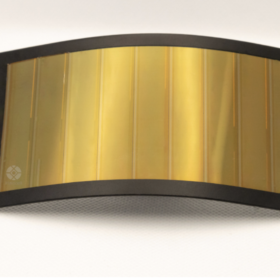
Halocell Energy, Sofab Inks advance perovskite collaboration
An ongoing collaboration between Australia’s Halocell Energy and U.S-based Sofab Inks finds that perovskite modules incorporating Sofab’s Tinfab electron transport layer maintain approximately 100% of their normalized efficiency after 1,300 hours under accelerated combined light and damp-heat testing.

Dismantled 28-year-old PV system reveals wasps nest in junction box
Researchers in Austria discovered a wasp nest inside the junction box of a 1998 rooftop PV module, illustrating how insects can exploit even sealed electrical components. The affected module showed significant degradation and partial failure, though overall results confirmed the surprising durability of older PV module designs.

Cooling solar modules with nanofluids based on graphene oxide, Mxene
An international research group has developed a novel solar module passive cooling system that integrates three-dimensional oscillating heat pipe (3D-OHP) with different combinations of nanofluids based on hybrid graphene oxide (GO) and a two-dimensional titanium carbide known as MXene (Ti3C2Tx). MXene compounds take their name from their graphene-like morphology and are made via selective etching of […]

U.S.-Israeli conflict with Iran tests solar supply
The U.S.-Israeli conflict with Iran is unlikely to materially affect solar manufacturing projects in the Middle East for now, as most of these investments remain at an early stage. OPIS analyst Brian Ng sees the most immediate risk in logistics. If disruptions persist, shipments of solar products into the region could be delayed and export pricing may turn volatile.

Chinese module trading slows after export tax rebate cancellation
In a new weekly update for pv magazine, OPIS, a Dow Jones company, provides a quick look at the main price trends in the global PV industry.

Internet-of-Things could bring solar module water cooling closer to commercial viability
A Czech team developed an IoT system using MQTT to autonomously cool PV panels, boosting daily energy yield by 7.38% with a positive net energy balance.
