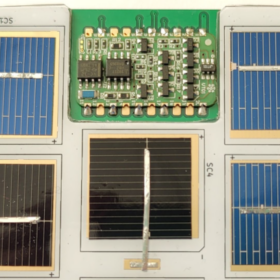
Sky’s the limit for mass produced space-grade solar cell innovation
Extraterrestrial Power has developed a space-grade solar cell thin enough for mass production and estimates it to be 10 times cheaper than current space solar cells.
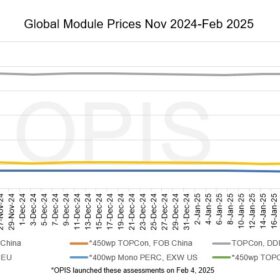
Global module prices stable-to-soft amid mixed sentiments
In a new weekly update for pv magazine, OPIS, a Dow Jones company, provides a quick look at the main price trends in the global PV industry.

Higher voltage faces greater resistance
Utility-scale solar is set to crank up the voltage, preparing to shift from 1.5 kV to 2 kV on the DC side. It is a move that could redefine PV system design and slash costs, but it won’t happen globally due to vastly different regulations as voltages rise, reports Tristan Rayner.
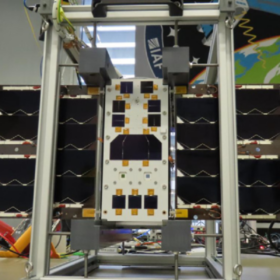
Triple-junction metal wrap through solar cells tested in space
A team of German researchers has developed a miniaturized solar cell experiment for nanosatellites. It was used to test samples of new mutlijunction solar cells developed by Azur Space, including novel triple-junction metal wrap through solar cells.
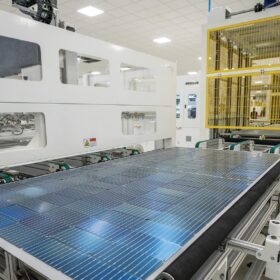
Grew Solar to set up 3 GW ingot-module factory in India
Grew Solar says its new factory in the Indian state of Madhya Pradesh will produce 3 GW of ingots, wafers, cells and modules per year.

The impact of impurity concentrations in gallium-doped p-type silicon ingots
The University of Konstanz and Chinese panel maker Longi have assessed the impact of gettering on LeTID in industrial Czochralski grown gallium-doped p-type silicon ingots and have found that defect density depends on impurity concentrations in the melt, which are observed in the case of interstitial iron concentrations.
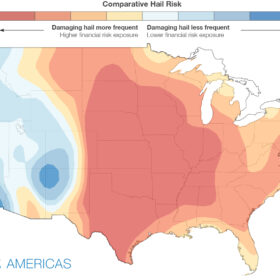
Atlas details economic risks of hail damage to US solar sites
VDE Americas’ new hail risk atlas, now available for use on the Esri ArcGIS platform, can compare and evaluate the site-specific hail risk of current and future solar projects across the United States.
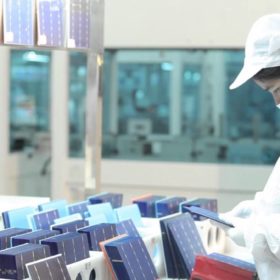
JinkoSolar sues Waaree Energies for alleged TOPCon patent infringement
JinkoSolar has filed a lawsuit in Texas against Waaree Energies and its US subsidiary for the alleged infringement of one of its n-type tunnel oxide passivated contact (TOPCon) patents, marking another move in its aggressive patent defense strategy.

New test method for curved VIPV surfaces
IEA-PVPS has conceived a new test method and analysis of the impact of curvature in vehicle-integrated photovoltaics (VIPV) surfaces. Over the course of an 8-day summertime trial in south-eastern France, the researchers found that the curvature triggered irradiance and temperature non-uniformity of up to 261W/m² and 13 C, respectively.
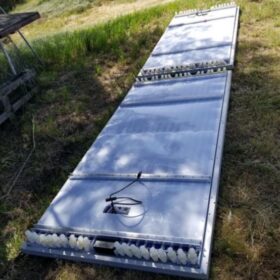
Canadian startup secures patent for solar module cooling tech
Enertopia has developed a solar module cooling system that uses a moisture collection layer to transfer heat while capturing water for irrigation in arid regions. The design channels heat from the panel to a liquid transfer system, improving efficiency and water use.
