
Indian state allots land for solar manufacturing projects
The Indian state of Madhya Pradesh has received solar manufacturing proposals from Grew Energy, Insolation Green Energy, Premier Energies Global, Saatvik Solar and other companies. Land allotment letters for these industrial units were recently given away by the state’s chief minister.

Trump touts solar trade tariffs
While the US Inflation Reduction Act (IRA) is reshoring solar manufacturing in the United States, raising import tariffs may slow momentum. The actions of the incoming Trump administration are tough to forecast at this point.

Solar trade headwinds
Prices across the solar supply chain remained in bearish territory into the fourth quarter of 2024. Trade and regulatory developments have continued to preoccupy the industry and dampen trading activity.
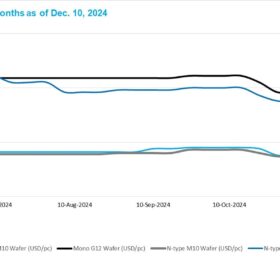
Solar wafer prices stabilize as supply rationalizes, regional policies shape production and trade
In a new weekly update for pv magazine, OPIS, a Dow Jones company, provides a quick look at the main price trends in the global PV industry.
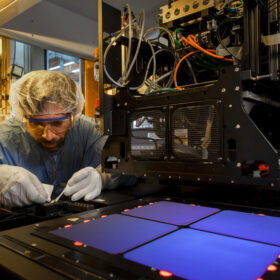
Fraunhofer ISE developing copper metallization for tandem perovskite-silicon solar cells
The German research institute said it is currently exploring three copper metallization methods: Screen printing, FlexTrail printing and rotary printing. The proposed technology is reportedly compatible with either TOPCon or heterojunction bottom cells.
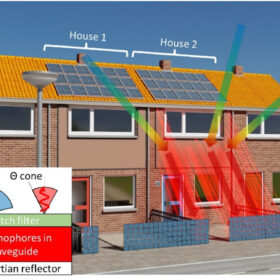
Improving vertical bifacial PV system performance with free-space luminescent solar concentrators
New research from the Netherlands shows that using free-space luminescent solar concentrators could be used to considerably increase bifacial solar module performance in vertical residential setups. The scientists are confident that a variety of bifacial PV systems incorporating this technology can be designed and deployed in the future.
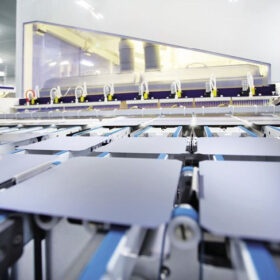
Solar manufacturing slows in bid to balance supply and demand
Smaller solar manufacturers have been shuttering production lines, but not at a pace fast enough to return profit margins to healthy territory. InfoLink’s Amy Fang considers what lies ahead for PV companies in the near term.
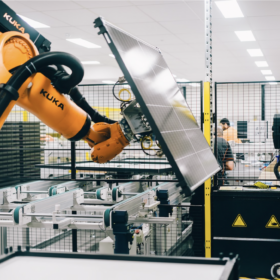
New report urges Australia to reduce solar supply chain reliance on China
A new report by the United States Studies Centre (USSC), a joint venture of the American Australian Association and University of Sydney, encourages Australia to deeply engage in global solar supply chains and reduce its reliance on China.
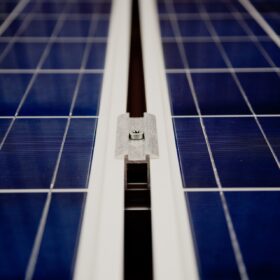
Cooling PV modules with lauric acid and nanoparticles
Thai researchers developed three organic phase-change material (PCM) mixtures with nanoparticles to cool PV modules and improve efficiency. They used lauric acid blended with aluminum oxide, copper oxide, and magnesium oxide in an optimal 94:6 weight ratio, boosting module efficiency by up to 14.11%.

Perovskite-silicon tandem solar cell based on wide-bandgap top device achieves 33.10% efficiency
Researchers in China have integrated a wide-bandgap perovskite solar cell with a hybrid back contact device in a four-terminal tandem cell that achieves high efficiency and stability. Key for the strong performance was a new surface passivation strategy that the research group adopted for the top cell.
