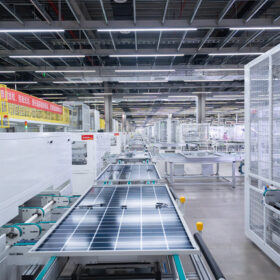
Chinese PV Industry Brief: Tongwei starts due diligence on bid for Runergy
Tongwei has initiated due diligence on its CNY 5 billion ($691.8 million) bid to acquire Chinese solar maker Runergy, aiming to secure at least 51% of its equity. The deal, which would be the largest in the PV sector this year, remains subject to changes or potential termination.

Understanding renewable energy ‘drought’ at solar, wind sites
An international research team based across Canada, China and the US have said developers must stop focusing not only resource availability, and also consider resource variability and resource extremeness, to avoid renewables “drought” at solar and wind sites.
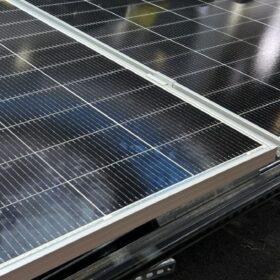
Premier Energies to enter aluminum frame manufacturing
Premier Energies, a solar cell and module manufacturer in India, will set up an aluminum frame factory with an annual capacity of 36,000 metric tons for captive consumption.

Polysilicon prices decline amid rising inventories, weak demand
In a new weekly update for pv magazine, OPIS, a Dow Jones company, provides a quick look at the main price trends in the global PV industry.

Nine-year EL testing on 85,000 PV modules shows increasing presence of edge ribbon cracks
A UK research team used electroluminescence imaging to inspect 167 PV installations comprising a total of 5 million solar cells. Defects were categorized into into line cracks, complex cracks, edge-ribbon cracks, and potential-Induced degradation (PID).

Brazil raises solar module import duty from 9.6% to 25%
Brazilian PV association ABSolar says the Brazilian government’s decision to raise the import duty on solar modules from 9.6% to 25% could slow the country’s energy transition and negatively affect ongoing projects.
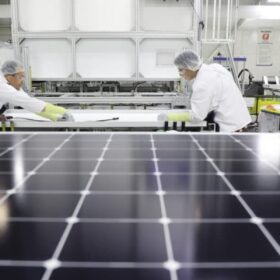
Maxeon solar panels shipped from Mexico denied entry to U.S.
U.S. Customs and Border Protection blocked Maxeon products despite “having provided clear and objective evidence” of a compliant supply chain.
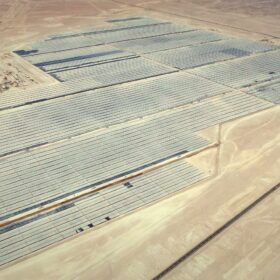
PowerChina launches 52 GW solar module, inverter tender
PowerChina has launched a 52 GW procurement plan for 2025, which includes solar modules, inverters, and 16 GWh of energy storage systems.

Custom-colored modules increase social acceptance of building-integrated photovoltaics
A study by the University of Freiburg and the Fraunhofer Institute for Solar Energy Systems finds that deploying color-matching solar modules on a building’s roof or facade further increases social acceptance of building-integrated photovoltaics (BIPV).
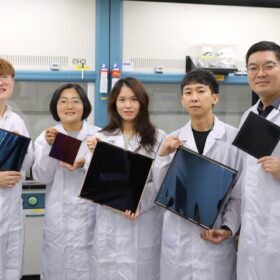
KRICT sets world record with 20.6% efficiency for large-area perovskite cells
The Korea Research Institute of Chemical Technology (KRICT) has set a world record for power conversion efficiency at 20.6% for large-area perovskite solar cells exceeding 200 cm². The result, confirmed by Germany’s Fraunhofer Institute for Solar Energy Systems ISE (Fraunhofer ISE), marks a significant milestone in solar cell technology.
