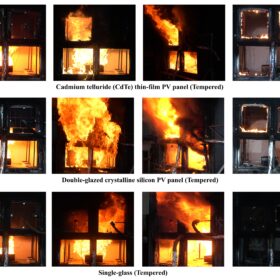
How BIPV façades behave under enclosure fire conditions
A group of scientists in China constructed a specialized compartment to test the thermal breakage and fallout of BIPV façades under enclosure fire conditions. They examined three different types of BIPV modules and found that tempered-glass PV panels exhibit superior thermal and mechanical resistance to breakage.
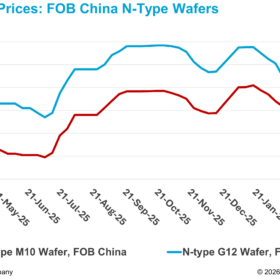
China wafer declines narrow as demand-side regulation lifts market sentiment
In a new weekly update for pv magazine, OPIS, a Dow Jones company, provides a quick look at the main price trends in the global PV industry.
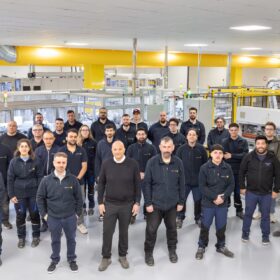
Inside PV Manufacturing: Midsummer’s CIGS factory in Italy
The Swedish thin-film solar specialist produces 50 MW of modules at its Bari facility, using its proprietary DUO system for cell manufacturing. The company says it sources all materials from the EU and other countries in the global North.

Saatvik Green Energy enters transformer manufacturing
Indian solar manufacturer Saatvik Green Energy has acquired an 80% stake in Jaipur-based Melcon Transformers and Electricals, expanding into power transmission equipment. The move strengthens its position in a segment closely tied to India’s growing renewable energy sector.
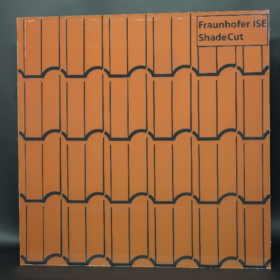
Fraunhofer ISE develops colored film tech for patterned solar modules
Scientists at Fraunhofer Institute for Solar Energy Systems ISE have created a film-based system that applies color patterns and cutouts to PV modules using the institute’s MorphoColor technology, enabling modules to imitate roof tiles, masonry, and facades with around 5% efficiency loss.
Manufacturing partnership brings new PV technology to U.S.-sourced solar
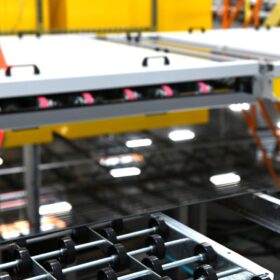
Solx’s Aurora hybrid module with Caelux’s perovskite glass aims to compete on performance beyond federal tax sunsets.
Trina Solar, JA Solar, JinkoSolar launch China’s first PV patent pool for TOPCon technologies
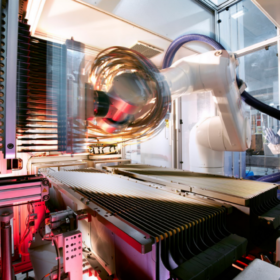
China’s solar industry has launched its first TOPCon-focused patent pool, led by Trina Solar, JA Solar, and JinkoSolar, to streamline licensing, reduce disputes, and strengthen IP coordination at home and abroad.

Inside PV Manufacturing: Belga Solar’s module factory in Belgium
In the latest article of a new series on solar manufacturing facilities around the world, pv magazine presents Belga Solar’s solar manufacturing facility in Wallonia, Belgium.

Dutch buildings could host 36 GW of façade solar capacity
A new report from the Netherlands Enterprise Agency (RVO) estimates that building façades could offer up to 36 GW of technical solar PV potential, representing a significant but largely untapped resource. However, high costs, regulatory complexity, and lower performance compared to rooftop systems limit widespread adoption, currently making façade PV a niche solution for specific building types.

Rethinking silver paste design for TOPCon, LECO solar cells
Researchers in China have developed an evaluation framework to better assess fine-line silver pastes for TOPCon and LECO solar cells. The approach links laboratory characterization directly with production-line performance, addressing the limitations of conventional evaluation methods.
