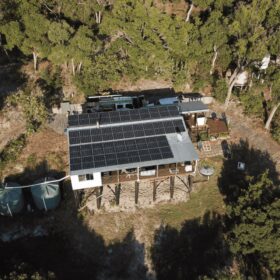
Australian off-grid project upgrade shows power of modern PV
An off-grid residential system on a secluded island in Australia has received a new tech upgrade. The additional capacity highlights the new era of off-grid living available to remote households in the country.
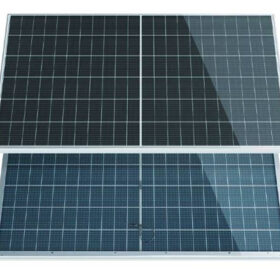
SEG Solar unveils 700 W TOPCon solar modules with 22.53% efficiency
SEG Solar says its new panels have a temperature coefficient of -0.30% per C. They come with a 30-year power output guarantee for 87.4% of the initial yield.

Large-format solar modules and legacy assumptions
While most large-format modules are lab tested for certification, the lab is not the real world. The field loading applied to a solar module depends on the structure on which it is mounted and the terrain of the project.

TechBlick’s event shows roadmaps for perovskite, organic PV
A recent industry event about organic, perovskite, and other emerging cell technologies hosted by TechBlick revealed advances in power conversion efficiencies, stability, availability of materials, and specialized manufacturing equipment. The event also showed that the number of startup companies, new products and new pilot lines is increasing at a fast pace.
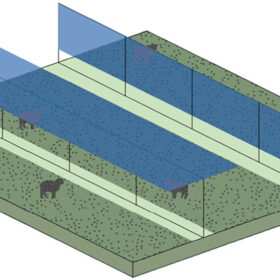
Overhead vs. vertical agrivoltaics
A survey conducted by Dutch researchers has compared the visual impact of overhead and vertical agrivoltaics farms on nearby residents and has found that vertical arrays look less invasive.
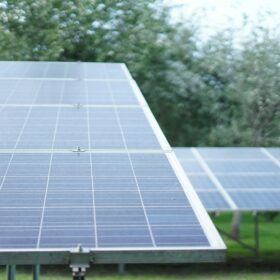
US market’s top 10 solar panel brands
SolarReviews ranks the top 10 solar panel manufacturers in a new report, based on weighted metrics such as value, quality, and US investment.
Investigating smoke dispersion in rooftop PV fires
Researchers have conducted a small-scale experiment on the behavior of smoke in PV-related fires. They have found that in homes featuring rooftops with a pitch of less than 45 degrees, residents only have about four minutes to safely evacuate.
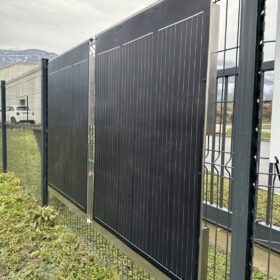
Sunwind releases vertical PV kit with anti-theft structure
Sunwind’s patented Vertisolar solution features two 352 W full-black PERC solar modules, a microinverter, a connection system, and a monitoring device. The package includes an anti-theft system that also protects the wiring and the microinverter.

Alpex Solar launches highly oversubscribed IPO
Alpex Solar, an India-based solar manufacturer, says it plans to use the proceeds of its highly oversubscribed initial public offering (IPO) to expand its PV panel capacity from 450 MW to 1.2 GW, in addition to setting up an aluminum frame manufacturing unit.
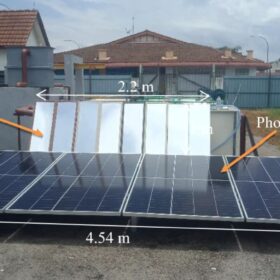
Malaysian researchers claim reflectors for PV modules are feasible
The research team tested a PV system prototype with a mirror reflector and found it could be economically feasible “under Malaysian climatic conditions.” Their analysis was based on the cost-effectiveness factor (FCE), which is a parameter that must be considered when designing an enhancer such as a reflector or a cooling technology in PV systems.
