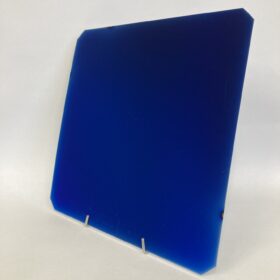
ISC Konstanz claims 24% efficiency for tunnel back contact solar cell
ISC Konstanz researchers say their new n-type tunnel back contact (TBC) solar cell features polycrystalline silicon TOPCon contacts on both polarities. The results still need to be confirmed by an independent third party.

India’s solar module exports hit $1.1 billion in April-October period
India’s solar module exports surpassed $1.1 billion in value in the April-October period of the current 2023-24 fiscal year.
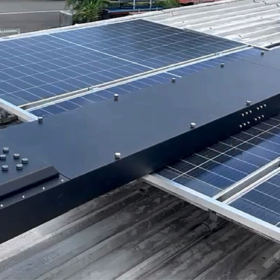
Singaporean startup unveils high intensity illumination tech that ‘rejuvenates’ solar panels
NTU Singapore researchers and startup EtaVolt presented a high intensity illumination device that can reportedly “patch up” the holes caused by light and heat in silicon solar cells. The new technique is claimed to reduce solar module degradation by up to 5 years and to be usable for around 90% of the solar modules available in the market.
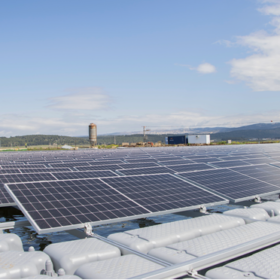
Mibet launches floating PV array system for offshore applications
Mibet, a Chinese mounting system supplier, says its new G5 product is capable of withstanding wind gusts of more than 60 meters per second. It uses high density polyethylene floats and aluminum alloy support legs.
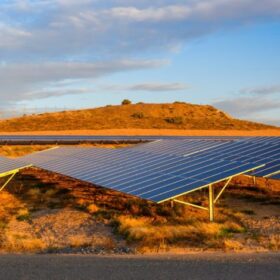
GenCost says PV, wind remain cheapest forms of electricity in Australia
The latest estimates of electricity generation costs in Australia reveal that solar and wind power are still the cheapest forms of power, even with the expense of integrating them into the grid.
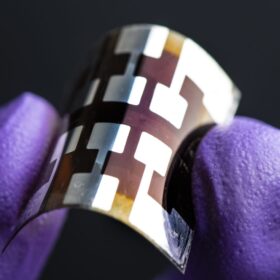
Researchers discover new factor in perovskite solar cell stability
Georgia Tech researchers have discovered that isolated water or oxygen exposure does not degrade cells, as it is the interplay of the molecules that causes rapid degradation.
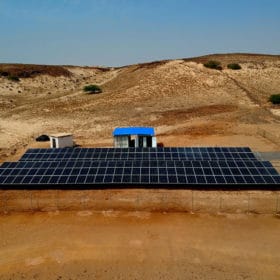
Solar PV key to transforming water, energy, food crises into a nexus opportunity
RES4Africa Foundation brings attention to the role of solar PV in addressing the water, energy and food crisis in the southern and eastern Mediterranean countries. The region is characterised by abundance of sunlight, coupled with scarce availability of agricultural land and freshwater resources to feed its fast-growing populations.
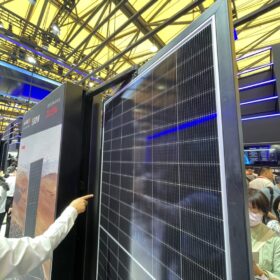
Longi announces 27.09% efficiency for heterojunction back contact solar cell
Longi has announced the achievement of 27.09% efficiency for its heterojunction back contact (HBC) solar cell, a result that has been confirmed by Germany’s Institute for Solar Energy Research (ISFH).

Ecostal acquires Project Zero
Belgian PV product distributor Ecostal has acquired Project Zero, a business-to-business specialist in Flanders, Belgium. It did not disclose the financial terms of the deal.
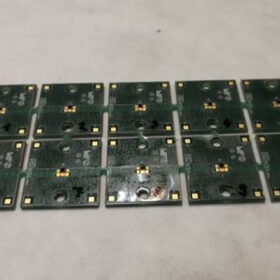
Downsizing concentrating photovoltaics
A Spanish research team aims to bring concentrating photovoltaics closer to commercial viability by miniaturizing its components. The scientists claim that smaller CPV cells may reduce production costs and enable better CPV module assembly.
