
Freight costs steady after early September spike
Freight costs, which contribute towards the total cost of a solar installation, have fallen week-on-week on trade lines out of the Far East, helping to offset a price surge in the US-bound short-term market recorded at the start of September.
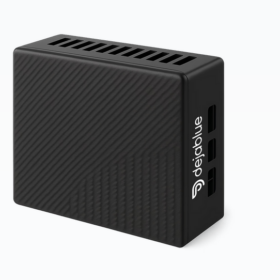
French startup launches solar-based EV charging optimization system
DejaBlue has developed a plug-and-play energy management system that boosts self-consumption and cuts costs for PV-powered EV charging sites.
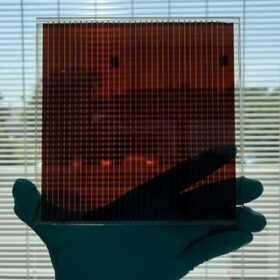
IPVF demonstrates 16.8%-efficient mini bifacial perovskite solar module
The French research institute said the bifacial wide bandgap perovskite technology is to be scaled in size to 60 cm x 30 cm for use in four-terminal perovskite-silicon tandem panels.
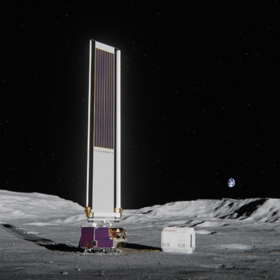
Astrobotic, Honda developing vertical solar, storage solution for lunar missions
Pittsburgh-based aerospace company Astrobotic and Honda’s North American subsidiary are working on integrating Astrobotic’s vertical solar array technology with Honda’s regenerative fuel cell system to develop a power and storage solution capable of supporting prolonged exploration of the moon.
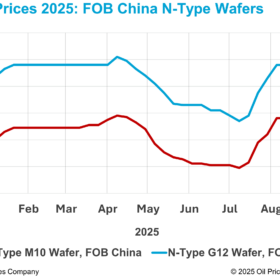
China wafer prices end four-week rally amid stable polysilicon, cooling demand
In a new weekly update for pv magazine, OPIS, a Dow Jones company, provides a quick look at the main price trends in the global PV industry.
Solar module prices to rise 9% in Q4, says Wood Mackenzie
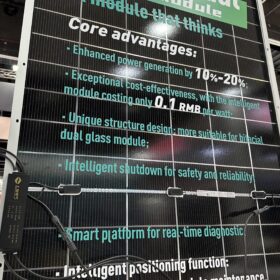
Wood Mackenzie says module prices will climb as China ends export rebates and consolidates polysilicon production.
New sieving tech for solar cell silver recovery
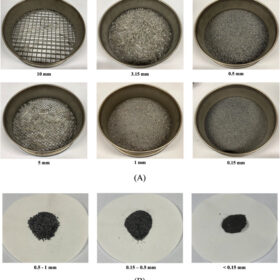
Researchers at University of New South Wales have reported details about a novel sieving-aids technology that improves the separation of metal fragments from other components when recycling end-of-life PV panels. The patented process reportedly enhances the recovery of silver.
Singlet fission research breakthrough unlocks high solar cell efficiency
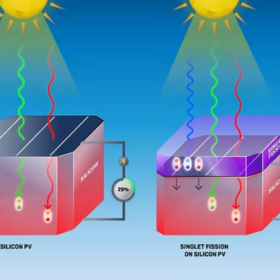
University of New South Wales (UNSW) researchers have filed patent protection and are working to scale production of a new class of photostable organic molecules proven to boost silicon solar cell efficiency, reduce heat and extend panel lifetimes using singlet fission.

Brazil imports 10.6 GW of solar modules in H1
Brazil imported 10.6 GW of solar modules in the first half of 2025, down slightly year over year as developers rushed to secure shipments before an import tax hike, according to Greener.

Building-integrated concentrating photovoltaics for vertical applications
An Indian-British research team has developed a building-integrated linear concentrating PV facade by sandwiching an asymmetric compound parabolic concentrator, PERC cells, and encapsulation layers between two sheets of glass. The system was tested under both indoor and outdoor conditions and its payback period was found to be of up to 11 years.
