
Australia on track for record year for small-scale solar, says analyst
Sunwiz says 2023 could set a new record for small-scale solar in Australia. Installations are still lagging 2021, which was Australia’s biggest year to date, but Sunwiz Managing Director Warwick Johnston tells pv magazine Australia that multiple signs point to a strong fourth quarter.

U.S. university deploys high density solar thermal system
US-based Creighton University has equipped a new student residence with solar heat collectors generating an annual peak capacity of 69.9 kW thermal energy. The VirtuHOT HD system, conceived for rooftop applications, includes an absorber plate, a borosilicate glass tube, and an integrated mounting system.
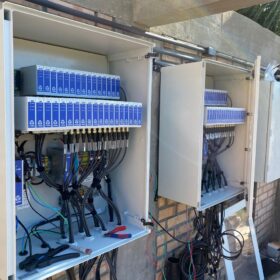
New performance measurement kit for outdoor testing of bifacial, perovskite solar modules
To perform a wide range of tests on new types of PV modules under realistic conditions, EKO Instruments has introduced PV Blocks, an expandable all-in-one type of system with capacity for up to 32 modules. It is targeted at research labs, module manufacturers, and testing organizations.
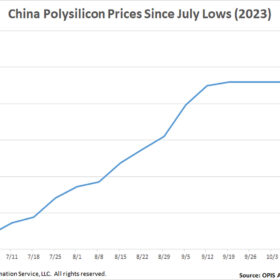
China polysilicon prices fall for first time in more than three months
In a new weekly update for pv magazine, OPIS, a Dow Jones company, provides a quick look at the main price trends in the global PV industry.

REC rolls out new 470 W rooftop solar panels
Singapore-based PV module manufacturer REC Group has launched in Australia a new series of rooftop solar panels with power ratings ranging from 450 W to 470 W and efficiencies of up to 22.6%.

Solar electric camper van with 400 km range
Detroit-based Grounded has introduced a new all-electric recreational vehicle (RV) built on a GM platform.

Will New Delhi hear the call from solar developers?
Falling solar equipment prices, bulk module orders, and an expansion in domestic solar manufacturing capacity are driving a solar boom in India. The government can add further impetus if it tweaks domestic content rules.
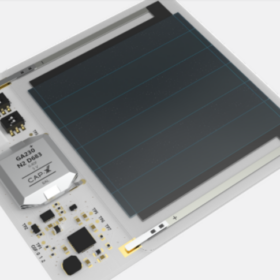
Epishine unveils organic PV kit for indoor battery-free applications
Sweden-based Epishine has launched a developer kit based on its 6-cell 50 mm x 50 mm organic PV module for prototyping and testing its use in battery-free indoor sensing and monitoring devices.

Dracula Technologies builds organic PV module factory in France
Dracula Technologies has built an organic photovoltaic (OPV) module factory in France to make OPV devices with digital printing technology for connected objects. The facility can produce up to 150 million cm² of OPV modules per year, with the first shipments scheduled to start in 2024.

PVT-driven geothermal heat pump system for greenhouses
South Korea’s Rural Development Administration has created an energy system for greenhouses that combines photovoltaic-thermal (PVT) panels with a ground-source heat pump. It is said to compensate, via the PVT panels, the typical shortcomings of geothermal energy and to be able to reduce heating and cooling costs in greenhouses by up to 78%.
