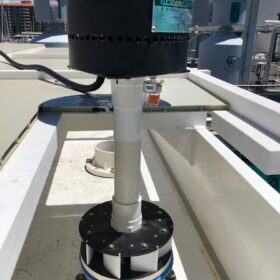
Solar-linkable pico-hydro turbine system for commercial buildings
Scientists in Australia have proposed to use a a propeller pico-hydropower turbine to recover the energy used for pumping water in a solar-powered commercial building. They have found that the mini hydro system is a relatively low-cost solution, able to recover approximately 10% of the energy used for pumping seawater.

Chinese PV Industry Brief: TCL Zhonghuan, Longi lower wafer prices
This week, Longi and TCL Zhonghuan reduced slightly the prices of their wafer products. Meanwhile, the China Photovoltaic Industry Association reports strong ouput growth for the solar industry.
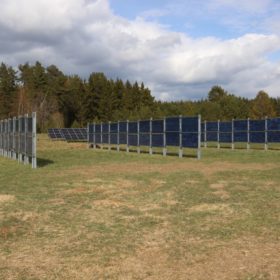
Vertical agrivoltaics to reduce PV curtailment, increase water efficiency
An international research group has analyzed a vertical bifacial agrivoltaics system in a drought-stricken part of Chile. They say that the solar array can improve water efficiency for crop irrigation, while the vertical system configuration optimizes PV power generation throughout the day, minimizing curtailment.
Huasun claims 23.96% efficiency, 744.4 W output for heterojunction solar panel
The Chinese manufacturer said TÜV SÜD confirmed the results. It launched the G12 series of heterojunction solar modules, with a focus on utility-scale projects, in the second half of 2022.
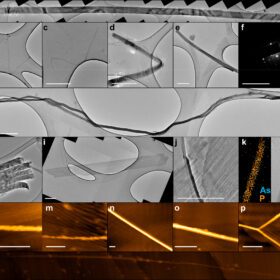
Phosphorus-arsenic nanoribbons may improve solar cell performance
UK researchers have developed ultra-thin nanoribbons, just 1 atom thick, by combining phosphorus and arsenic alloys. The nanoribbons offer excellent conductivity, even at temperatures exceeding -143.15 C, and have the potential to enhance charge flow in solar cells.

Sunmaxx builds 50 MW PV-thermal solar module factory in Germany
Sunmaxx PVT, a photovoltaic-thermal solar module specialist, has started building an automated 50 MW module factory near Dresden, Germany.
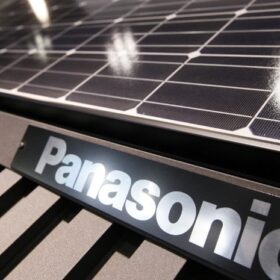
Panasonic introduces half-cut HJT residential solar modules
Panasonic unveiled its new residential solar modules – including half-cut heterojunction (HJT) models, along with a home battery system and energy management device – at the recent RE+ trade show in Las Vegas.
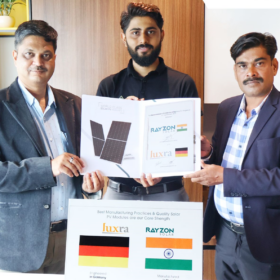
Luxra, Rayzon Solar set up PV module production venture in India
Swiss-German company Luxra Group and India’s Rayzon Solar have agreed to set up a joint venture for PV module production in India. The partnership will combine Luxra’s technology and Rayzon’s operational expertise in PV panel manufacturing.
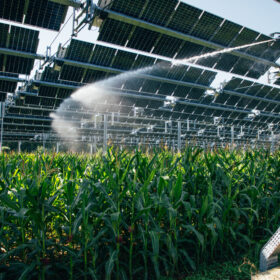
French developer builds agrivoltaics facility with irrigation system
TSE has installed a 2.9 MW agrivoltaics plant in northern France with sensors to trigger an irrigation system. The irrigation setup can reportedly achieve significant water savings. The company is selling the electricity under a 20-year power purchase agreement (PPA).
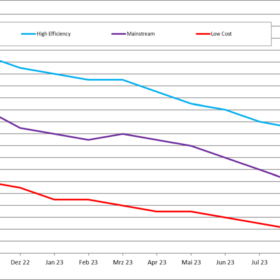
Solar module price falling, with no end in sight
Solar module prices have never fallen so sharply in such a short period of time. One reason for this is the “PV module glut” in warehouses in Europe, according to pvXchange’s Martin Schachinger.
