
Australian student team to push for change in World Solar Challenge
The solar-powered Stella Terra test car from Eindhoven University in the Netherlands has just completed a 1,000-kilometer test drive from northern Morocco to the Sahara. In Australia, the solar car racing team from the University of New South Wales says the real challenge is to find new ways to push the boundaries of solar car races.
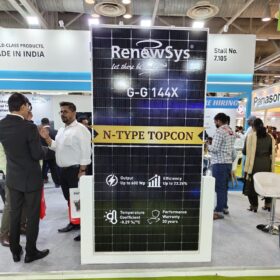
RenewSys unveils 600 W TOPCon solar module with 23.26% efficiency
Mumbai-based RenewSys has launched the Deserv Extreme series of bifacial dual-glass solar modules based on TOPCon technology. The modules are available in peak power outputs of 560 W to 600 W, with front-side efficiencies of up to 23.26%
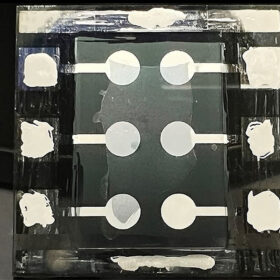
Hong Kong researchers develop inverted perovskite solar cell with 25.6% efficiency
The research team said the cell also achieved remarkable thermal stability, as it was able to retain 90% of its original efficiency for over 1,000 h. The device uses a self-assembled monolayer to stabilize the interface between the perovskite absorber and the hole transport layer.

Chinese PV Industry Brief: Sunrev plans 20 GW solar cell, module factory
Sunrev says it plans to build a vertically integrated cell and module facility in Xining, in China’s Qinghai province.
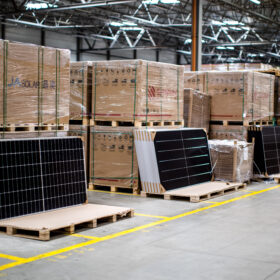
Europe may go back to ‘normal’ inventory levels by June 2024
pv magazine recently spoke with Bartosz Majewski, CEO of Menlo Electric, a Poland-based solar distributor operating in Europe, about high inventory levels of solar panels in Europe.

Amazon drought means clear skies for solar in South America
In a new weekly update for pv magazine, Solcast, a DNV company, reports that there was increased sunshine across the South American tropics last month, with solar assets accruing up to 120% of irradiance gains for September.

Integration on hold: Energy Taiwan 2023
This week, pv magazine was in Taipei for the Energy Taiwan exhibition. The island is moving forward on net-zero ambitions and hosts a renewable energy industry ready to support other companies in achieving them. There is much focus on energy storage and grid integration, as Taiwan looks to create space in its grids for more renewable energy. However, with elections upcoming in early 2024 and one party likely to favor nuclear over renewables, many projects are now on hold.
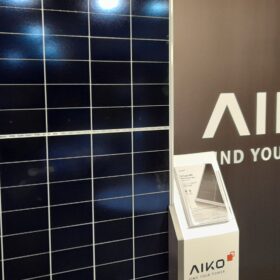
Aiko Solar presents 24.0%-efficient solar modules
The Chinese manufacturer presented its AIKO-A-MAH72Mw, AIKO-A-MAH54Mb and AIKO-A-MAH54Mw modules at the Fintec event in Barcelona. The new products rely on the company’s all-back-contact (ABC) cell technology and feature a temperature coefficient of -0.26% per C.
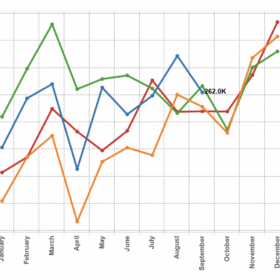
Australia on track for record year for small-scale solar, says analyst
Sunwiz says 2023 could set a new record for small-scale solar in Australia. Installations are still lagging 2021, which was Australia’s biggest year to date, but Sunwiz Managing Director Warwick Johnston tells pv magazine Australia that multiple signs point to a strong fourth quarter.
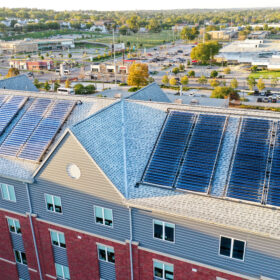
U.S. university deploys high density solar thermal system
US-based Creighton University has equipped a new student residence with solar heat collectors generating an annual peak capacity of 69.9 kW thermal energy. The VirtuHOT HD system, conceived for rooftop applications, includes an absorber plate, a borosilicate glass tube, and an integrated mounting system.
