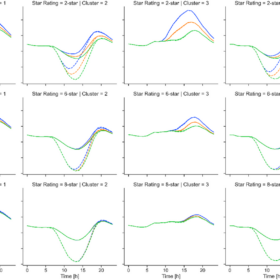
Mitigating residential duck curve via solar pre-cooling
Solar pre-cooling consists of using residential PV systems to run air conditioners to pre-cool residential and commercial buildings. It offers benefits in terms of mitigating low minimum demand in electricity networks, flattening the grid’s net demand profile, and reducing electricity bills.
Chinese PV Industry Brief: CNMIA reports increase in polysilicon prices
The China Nonferrous Metals Industry Association (CNMIA) says that polysilicon prices rose this week, while TCL Zhonghuan raised wafer prices for the second time in 10 days.
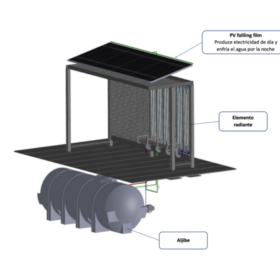
Solar bus canopy reduces temperature by up to 20 C
The University of Sevilla has designed a PV-powered “smart” canopy that activates a thermal conditioning system to reduce extreme heat by up to 20 C.
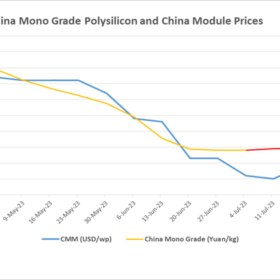
Prices of China’s PV upstream segments rise, module prices hold steady amid bearish sentiments
In a new weekly update for pv magazine, OPIS, a Dow Jones company, provides a quick look at the main price trends in the global PV industry.

Maxeon to build 3 GW TOPCon cell, module plant in New Mexico
Maxeon is set to invest $1 billion in the construction of a 3 GW TOPCon cell and module plant in the United States.
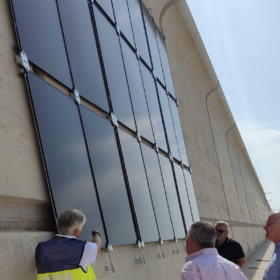
Vertical PV for breakwaters
The port of Valencia, Spain, is assessing the performance a vertical PV wall featuring 21 solar modules, with 8.6 kW of total capacity. A successful pilot project could pave the way for a larger vertical PV system on the port’s breakwaters.

Brazil imported 7.8 GW of solar modules in H1
Brazilian consultancy Greener says that Brazil imported 7.8 GW of solar modules in the first half of this year, down 21% year on year. However, it says a reduction in distributors’ inventories and module prices could drive up cost competitiveness in the second half.
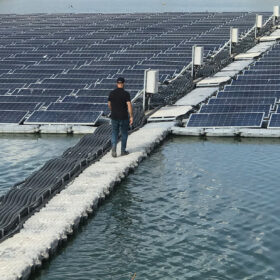
Novel fins increase floating PV productivity, reduce LCOE by over 17%
A group of researchers in Egypt studied the use of partially submerged angle perforating fins (PSAPF) and solid fins (PSASF) to assess their ability to remove excess heat from floating photovoltaics under Mediterranean outdoor environments. The team found that the optimized PSAPF-FPV module achieved an LCOE of $0.068/kWh).
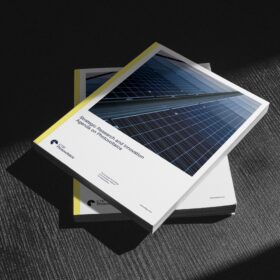
Five core challenges of the European solar photovoltaics research and innovation
In its latest monthly column for pv magazine, the European Technology and Innovation Platform for Photovoltaics (ETIP PV) presents its Strategic Research and Innovation Agenda (SRIA), published in collaboration with the European Energy Research Alliance for PV (EERA-PV).
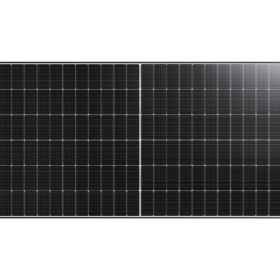
Winaico releases 525 W TOPCon solar panels
Taiwanese manufacturer Winaico has developed new 525 W TOPCon solar panels with a power conversion efficiency of 22.1% and a temperature coefficient of -0.30% per degree Celsius.
