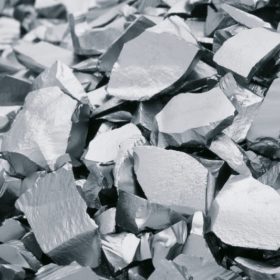
Wacker to expand polysilicon production in Germany
Munich-based Wacker announced it intends to set up a new production line for semiconductor-grade polysilicon at its facility in Burghausen, Germany. The €300 million ($324.4 million) investment would expand the manufacturing capacity of the ultrapure polysilicon by over 50%.
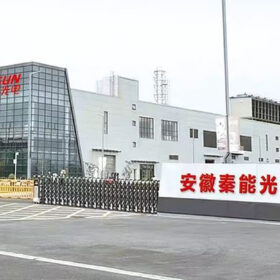
Chinese PV Industry Brief: Q-Sun Solar expands module capacity by 12 GW
Q-Sun Solar says it plans to invest CNY 6.2 billion ($865.6 million) to build 10 GW of solar cell capacity and 12 GW of PV panel capacity.

Intersolar 2023: Brand New
pv magazine is on the ground bringing you the latest developments from this year’s three-day European solar shindig in Munich.
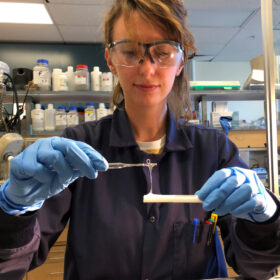
Treatment promises 1000-hour stability for solar perovskites
Scientists in China and Canada have developed an additive that forms covalent bonds with the organic materials in a perovskite solar cell, leading to fewer defects and greatly reduced degradation. Cells treated with the additive maintained 98.6% of their initial performance after 1,000 hours in testing. Xlynx Materials, a company spun out of the University of Victoria in Canada, is making the material available for further commercial trials.
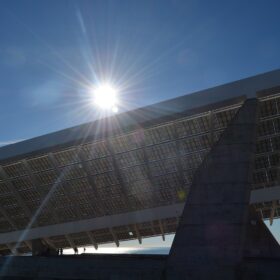
Reducing solar module temperature with acrylic sheets
Jordanian researchers have developed a method using acrylic sheets to reflect and absorb unused solar radiation in PV power generation. The solution has the potential to decrease solar panel temperature by more than 14% and increase power yields by approximately 2%.

Potential benefits and challenges of PV-powered vehicles
The extent to which PV-powered vehicles contribute to a reduction of CO2 emissions depends on variables such as the carbon intensity of the local grid, driving patterns, and solar irradiation. The market introduction requires technical optimization of the PV, but also of the vehicles.
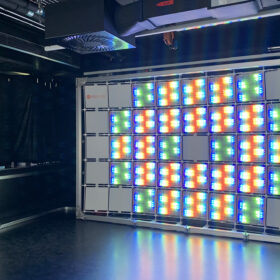
Wavelabs launches LED-based flashers for module manufacturers and R&D lab
The German PV testing equipment provider said its new Sinus-3000 Pro line is an ‘all-in-one system’ that can perform power measurements, bypass diode testing, insulation testing, visual inspection, and electroluminescence measurements. It is also offering the Sinus-3000 Advanced line for the testing of perovskite-silicon tandem, multi-junction and other new material cells.

Recom launches 460 W all-black TOPCon solar modules with 23.6% efficiency
Recom is offering five versions of its new all-black panels, with power outputs ranging from 440 W to 460 W and efficiency ratings of 22.5% to 23.6%. They feature 108 half-cut monocrystalline cells with n-type and back-contact technology.

Hurtigruten Norway plans wind-solar ship with 60 MWh of storage
Hurtigruten Norway. a cruise ship operator, said its new wind-solar-powered cruise vessel will be ready in 2030. It will have a storage capacity of 60 MWh.
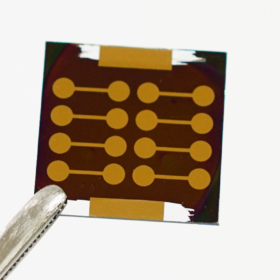
All-perovskite tandem solar cell with 28.5% efficiency
A Chinese research team has fabricated an all-perovskite solar cell with a 3D/3D double-layer perovskite heterostructure that reportedly ensures improved charge extraction. The device achieved an open-circuit voltage of 2.112 V, a short-circuit current of 6.5 mA cm-2, and a remarkable fill factor of 81.9%.
