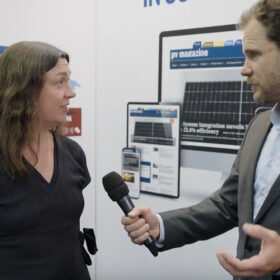
Solar Leaders at Intersolar 2023: ‘Making modules cheaper will benefit buyers, but it won’t create demand’
At Intersolar in Munich, pv magazine spoke with Jenny Chase, solar analyst at BloombergNEF, about falling solar module prices, oversupply, bottlenecks in the European markets, and labor issues. According to Chase, lower panel prices won’t instantly create demand, and manufacturers should prepare to deal with very low margins. She also said we can expect to see more consolidation in the industry, and bankruptcies for uncompetitive producers may be unavoidable.
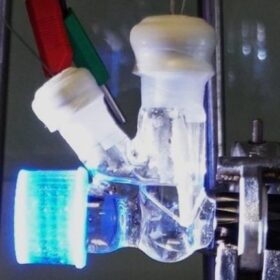
PV-powered tech to convert CO2, plastics into suistanable fuels
Cambridge scientists have designed a new reactor that is able to convert CO2, water, and plastics into syngas. The system utilizes a photoelectrochemical device powered by an encapsulated triple cation perovskite-based photocathode and an alloy anode.
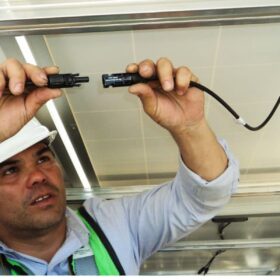
Main causes of solar performance issues
A new report by HelioVolta shows that 62% of inspected PV projects have critical or major issues.

Munich arrest before Intersolar tied to anti-dumping subsidy case, says lawyer
The German police arrested a Chinese citizen at Munich Airport last week, prior to the start of the Intersolar Europe trade fair. Investigators are targeting the detained individual for allegedly evading anti-subsidy and anti-dumping duties imposed on PV products in the European Union prior to September 2018, a lawyer told pv magazine.
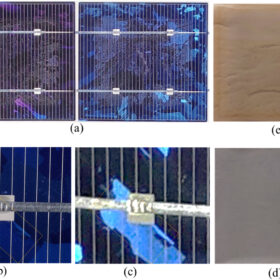
Keep your solar cells dry
Scientists in Norway used various imaging and characterization techniques to analyze the cells and other components of silicon PV modules that had been installed in the field for more than 10 years. The group’s aim was to isolate the role of moisture in various mechanisms that cause performance loss over time, and to understand how these mechanisms progress over long-term installation in real outdoor conditions.

Chinese PV Industry Brief: January-May solar installations hit 61.21 GW
The National Energy Administration (NEA) says China installed 61.21 GW of solar in the first five months of this year, bringing the nation to nearly 453 GW of cumulative installed PV capacity by the end of May.
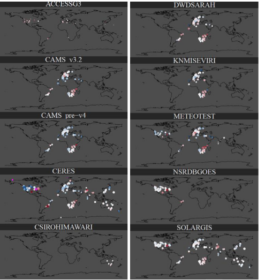
IEA-PVPS releases global benchmark for solar irradiance data
IEA-PVPS has published a report to help the solar industry to choose appropriate surface radiation models and data providers based on location and application requirements.
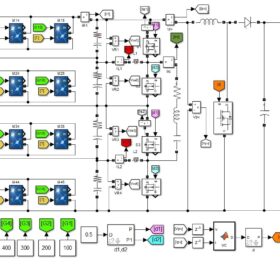
Rooftop PV system design to improve yield under partial shading
Scientists in India have proposed a new concept that improves the yield of rooftop PV systems under partial shading. This concept combines conventional total cross-tied (TCT) techniques with partial power processing converters (PPPCs), using a resonant switched capacitor converter (RSC) and a switch inductor converter (SLC).
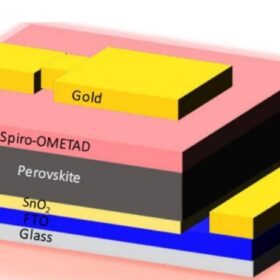
Triple cation perovskite PV cell with ETL based on tin(IV) oxide hits 17.1% efficiency
Qatari researchers have incorporated an electron transport layer (ETL) made of tin(IV) oxide into a perovskite solar cell through air-thermal-annealing, resulting in better efficiency and stability. The device demonstrated an open-circuit voltage of 1.045 V, a short-circuit current of 22.01 mA/cm2, and a fill factor of 74.3%.

AD Green commissions 3 GW solar module factory in Vietnam
The new manufacturing facility is located in Thai Binh and will produce modules mainly for the US market. It currently has a capacity of 500 MW and is expected to reach 3 GW within 12 months
