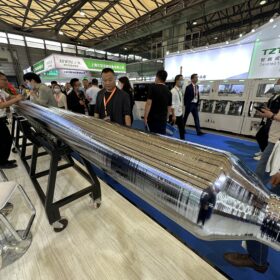
Chinese PV Industry Brief: CNMIA, Longi announce lower wafer prices
The China Nonferrous Metals Industry Association said this week that wafer prices dropped by up to 5.6% compared to a week earlier. Wafer manufacturer Longi, meanwhile, said that the price downward trend reached the bottom in late June, with demand now beginning to grow.
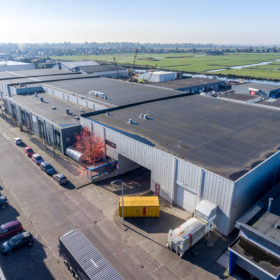
Dutch government allocates €412 million to support ‘circular’ PV panel manufacturing
The Dutch cabinet said it will support solar factories that will produce panels with a circular economy approach. It also allocated €296 million to support battery manufacturing.
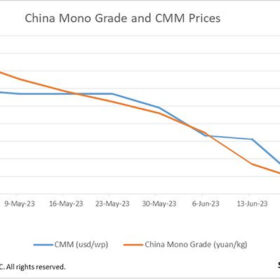
China polysilicon price fall decelerates as it reaches ground-floor
In a new weekly update for pv magazine, OPIS, a Dow Jones company, provides a quick look at the main price trends in the global PV industry.
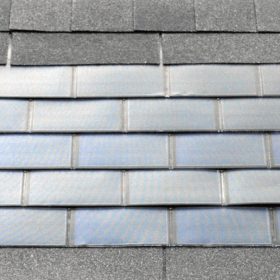
Roof-integrated solar takes 44% less time to install, says NREL
The National Renewable Energy Laboratory (NREL) conducted a time-motion study and found that retrofitting roof-integrated PV requires 7% less labor than standard solar installations. For new builds, installation times fall by 44%.
China halts tender for 4 GW offgrid solar-hydrogen project
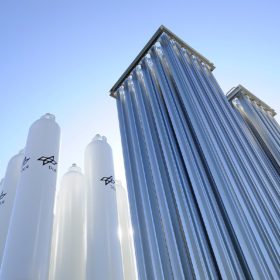
China has suspended a tender for a 4 GW off-grid solar-hydrogen project. The CNY 35 billion ($4.83 billion) project – set to be built in Jiuquan, Gansu province – includes 800 MW/1600 MWh of energy storage. It is designed to feature 8,638 electrolyzers and will span 67 km².
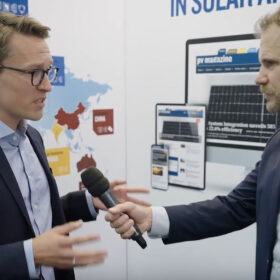
Intersolar 2023: ‘Prices will fundamentally come down’
Vegard Vollset, Vegard Wiik Vollset, Vice President at Rystad Energy, spoke with pv magazine about the global solar module supply chain and the possibility of producing polysilicon in Europe and the United States. He said solar module prices will inevitably continue to fall over the short term.
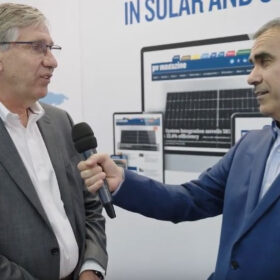
Intersolar 2023: Maxeon enters TOPCon segment, strengthens IBC panel output
Bill Mulligan, CEO of Maxeon, spoke to pv magazine at the recent Intersolar 2023 trade show about the Singapore-based module manufacturer’s expansion plans and tech roadmap, as well as current oversupply challenges. He said Maxeon plans to develop IBC products and TOPCon panels in shingle formats.
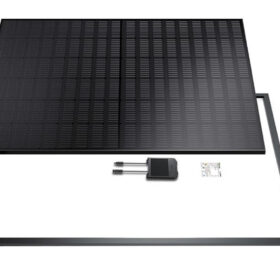
All-black solar panels with integrated cell string optimizers
Sonnex Energie is offering five versions of its new PV modules, with power outputs of 395 W to 415 W and power conversion efficiencies ranging from 20.23% to 21.25%. They also have a temperature coefficient of -0.35% per degree Celsius.
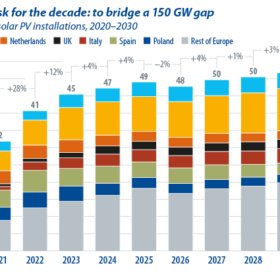
The year it all changed
The European solar landscape changed forever in 2022 and managing the supply chain, grid, and permitting constraints will be key to a solar-dominated energy future for the continent.
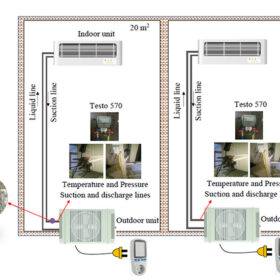
Novel assessment of PV-powered air conditioning
A research team in Turkey sought to assess how solar power may help reduce emissions and improve performance in air conditioning systems. Their analysis showed that using a heater in the AC system improves the coefficient of performance and mitigates negative environmental effects.
