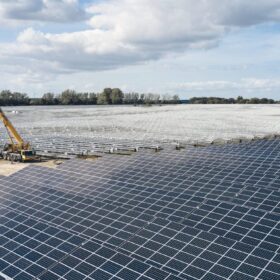
Enerparc COO signals 10-20% potential increase in European PV module prices
Growing interest in European-made solar modules for rooftop systems and PV plants reflects a willingness to increase investments, according to Enerparc COO Stefan Müller. In a recent interview with pv magazine, Müller discusses the market for corporate power purchase agreements (PPAs) and the viability of German solar PV tenders.
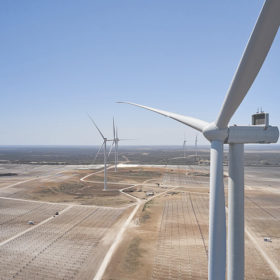
Tools to monitor PV hybrid system performance
Owners and operators of PV hybrid systems need to monitor and control system operation and performance, which generally involves the collection of big data sets. Data visualization techniques can simplify the monitoring and allow issues to be quickly recognized, says IEA-PVPS.
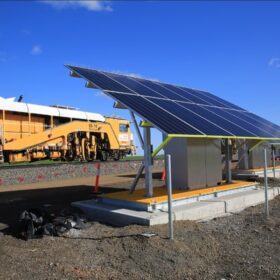
Solar for railway signaling sites
Australia’s largest rail infrastructure project, the Melbourne-Brisbane Inland Rail freight line, has made the switch to solar to power its signaling systems. The move is expected to deliver an estimated AUD 25 million ($16.93 million) in cost savings.
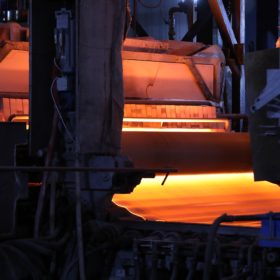
Borosil Renewables unit ramps up German solar glass capacity
Borosil Renewables says the solar glass capacity of its German unit, GMB Glasmanufaktur Brandenburg GmbH, has increased to 350 tons per day (tpd) from 300 tpd, following the modification of its furnace.

Chalcopyrite solar cell achieves 11.2% efficiency via silver alloying
Swedish researchers have used silver alloying to improve grain growth and crystal quality in the chalcopyrite absorber, which reportedly partly compensates for its high bandgap energy. The scientists fabricated a champion cell based on a ZTO buffer layer.
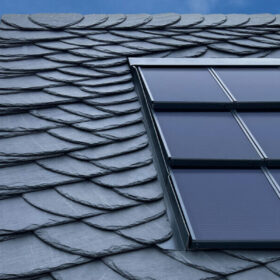
Meyer Burger unveils gray solar tiles
Swiss manufacturer Meyer Burger says that in August it hopes to begin distributing its new gray solar tiles, which are already being used in pilot projects.

US solar installers list Qcells, Enphase as top brands
A recent industry survey led by SolarReviews and the North American Board of Certified Energy Practitioners (NABCEP) shows that two-thirds of all solar installers expect high electricity prices to drive demand.

PV manufacturing capacity hit 600 GW in 2022
The new edition of the International Technology Roadmap for Photovoltaic (ITRPV), published this week, finds that 295 GW of PV modules was shipped in 2022, and that prices for silicon PV modules fell by 7% over the year. The report finds that price premiums for n-type modules are now marginal, and the technology grew to represent 15% of the market, and is expected to keep growing over the coming decade.
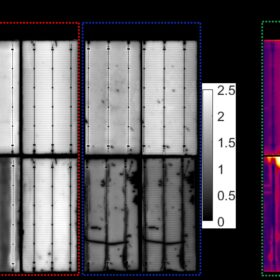
Scientists warn of heat-induced failure risks in HJT glass-backsheet PV modules
University of New South Wales researchers have identified four failure modes caused by damp heat in heterojunction solar panels with a glass-back sheet configuration. The failures could result in power losses ranging from 5% to 50%.
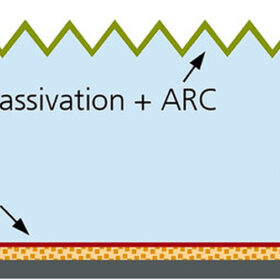
Epitaxially grown p-type wafers with TOPCon rear emitter solar cells
Scientists from Fraunhofer ISE have sought to utilize epitaxially grown p-type silicon wafers TOPCon rear emitter (TOPCore) solar cells with the aim of reducing production costs and carbon footprint. They claim this combination is paving the way for TOPCore devices that exceed 25% efficiency.
