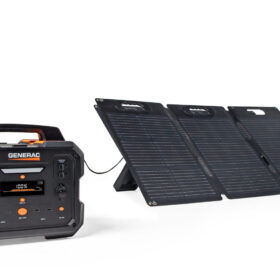
Generac introduces off-grid portable solar panels
Generac’s new 100 W solar panels can be paired with the company’s portable battery power stations.

Stella the Stargazer – the latest in a trend of luxury, solar-powered getaways
On the back of Covid-19 lockdowns, geopolitical energy concerns, a cost-of-living crisis, and congested cities, some people are looking for alternate ways of living, while others are just looking for an cozy getaway that doesn’t come with a Sasquatch-sized carbon footprint. Enter Stella the Stargazer, a solar-powered holiday destination that makes off-grid living the lap of luxury.
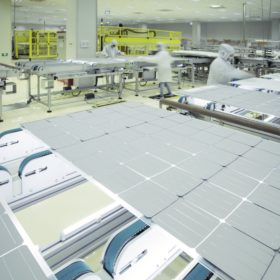
Longi reveals plans to open 5 GW solar module factory in US market
Longi Solar is working with PV developer Invenergy to build a solar module manufacturing facility in the US state of Ohio.
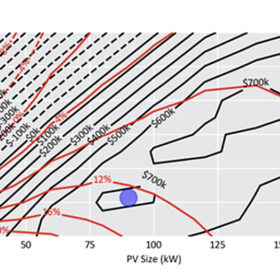
Optimizing off-grid PV systems for different design criteria
A new report by IEA PVPS Task 18 provides a blueprint guide on how to conduct feasibility studies for off-grid and edge-of-grid power systems. The optimal system size and specifications vary depending on the client’s priorities. The desired project outcomes can be identified using pure financial analysis (NPV, IRR) or additionally taking environmental performance into account.
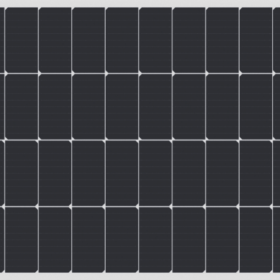
GoodWe releases 315 W BIPV panels with 17.4% efficiency
GoodWe will initially sell its new 315 W building-integrated PV (BIPV) modules in Europe and Australia. They measure 2,319 mm × 777 mm × 4 mm and weigh 11 kg.
Mexico’s Solarever commissions new 500 MW solar panel production line
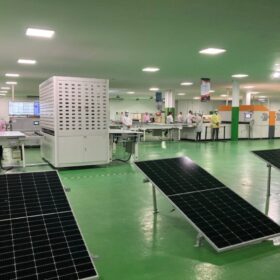
Mexican PV module manufacturer Solarever expects its newly announced production line has raised the annual capacity of its factory in southwestern Mexico to 1.1 GW.

Still big in Japan?
A flat year for solar installation numbers in Japan could be seen as positive in a nation switching to new PV business models, writes Izumi Kaizuka, director of research for Japanese solar consultancy RTS Corp.
Beyondsun launches TOPCon solar module series
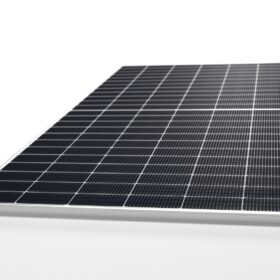
Chinese manufacturer Beyondsun said the new panel series are relying on 182mm n-type half-cut TOPCon cells and super multi busbar (SMBB) technology. It reaches a maximum efficiency of 22.45% and its power output ranges from 415 W to 580 W.
New technique to recover undamaged solar cells in end-of-life PV panels
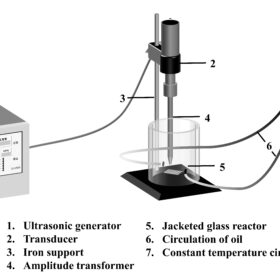
Scientists in China developed a novel swelling process to detach glass and EVA backsheets from solar modules at the end of their lifecycle. The technique utilizes an ester of a dicarboxylic acid known as dibasic ester. It reportedly prevents excessive cracking of solar cells.
Dutch-German consortium to bring 2T perovskite/silicon tandem PV to market
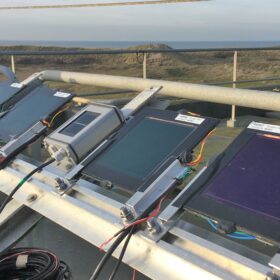
The consortium says it intends to develop a simplified approach and best practices to produce 2T perovskite-silicon tandem solar products. The modules should have a bifacial design, glass-glass encapsulation, and a power output of over 300 W/m2.
