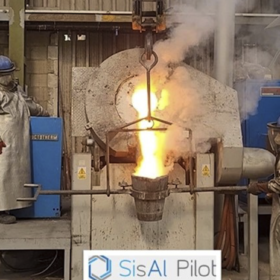
Novel production process for solar-grade silicon
The SisAl Pilot project produces solar-grade silicon from Spanish quartz without using coal and with zero CO2 emissions. The company behind the project claims that the process is cheaper and more sustainable.
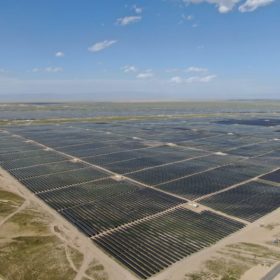
Chinese PV Industry Brief: Longi, JA Solar, Yingli share 1.05 GW of panel orders
Longi, JA Solar and Yingli have agreed to collectively supply 1.05 GW of solar panels to China Southern Power Grid, while Daqo New Energy has secured board for a planned $700 million share repurchase program.

Rooftop PV performance during heatwaves
Chinese researchers have assessed the impact of residential rooftop PV arrays on energy use and surrounding air temperatures during extreme heatwaves. They found that panels with higher conversion efficiencies achieved the best results.
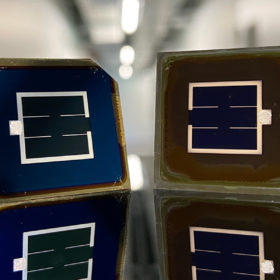
Flashing solutions for perovskite tandem cells, modules
A new white paper by testing equipment specialist Wavelabs outlines key challenges that the solar industry will face when it comes to testing and characterizing perovskite-silicon tandem cells in manufacturing environments.
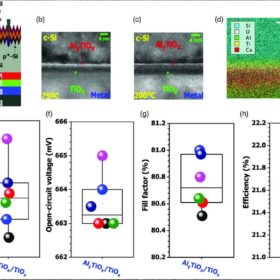
Transition metal oxides-based passivating contacts for 21.9%-efficient, n-type solar cell
An Australian research group has shown how passivating contacts based on transition metal oxides could replace contacts based on doped hydrogenated amorphous silicon or polycrystalline silicon in n-type solar cells in the future. They designed a cell with an open-circuit voltage of 665 mV, a short-circuit current of 40.78 mA cm−2, and a fill factor of 80.8%.
SunPower doubles earnings in record Q3
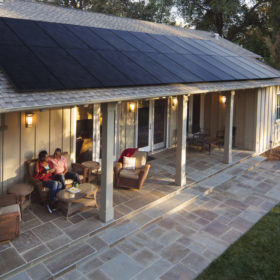
SunPower says more American people are turning to solar, as US retail energy prices rose 14.3% year over year through August.
Quantitative methodologies to assess technical risks in PV
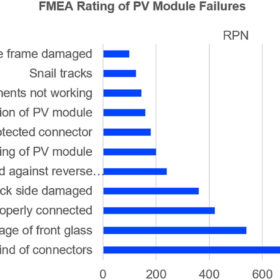
Researchers led by Germany’s TÜV Rheinland have created a database of technical risks and mitigation measures for PV installations. Their broad overview of quantification methods has shown that further standardization is required.

Canada introduces investment tax credits for renewables
Canada’s new 30% tax credits for clean technology are designed to level the playing field with the United States and spur the adoption of green technologies.
Most new solar panels retain 80% production after 30 years
A five-year Sandia Labs study on solar module degradation shows that 13 out of 23 tested module types have effective lifetimes exceeding 30 years.
New study looks at Sundrive’s 25.54% silver-free heterojunction solar cell
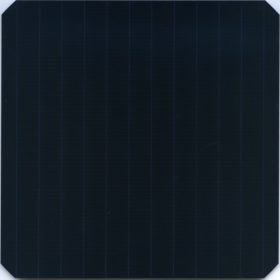
A new scientific paper takes a closer look at the record-breaking efficiency that Australia’s Sundrive announced for a silver-free heterojunction cell in September 2021, as certified by Germany’s Institute for Solar Energy Research.
