
‘Solar and wind deployment could not now be stopped if we wanted to’
BloombergNEF’s Jenny Chase has surveyed the state of affairs in world solar for clean energy journal Joule and said the technology’s historic ability to surmount obstacles – and persistently confound analysts’ predictions – should offer a reason for hope.
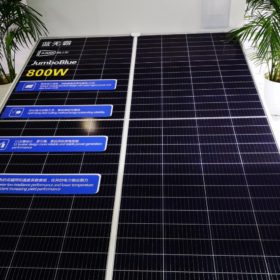
Chinese PV Industry Brief: JA Solar increases production capacity in Vietnam, IDG Energy enters solar business
JA Solar is expected to put another 3.5GW of cell capacity into operation by the end of June and Hong Kong-based IDG Energy Investment will venture into cell manufacturing by establishing a “foreign invested” project company.
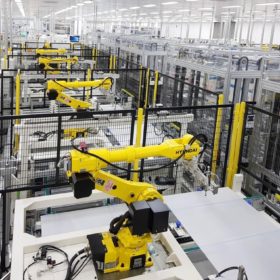
Hyundai enters heterojunction PV module business
Hyundai wants to use a partnership with South Korean PV equipment supplier Jusung Engineering to commercialize solar modules based on 24.45%-efficient heterojunction solar cells.
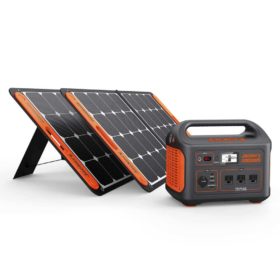
Offgrid solar generators for RVs, camping
Jackery displayed its latest portable solar generators at the recent Quartzsite RV Show, which is the world’s largest event for recreational vehicle enthusiasts.
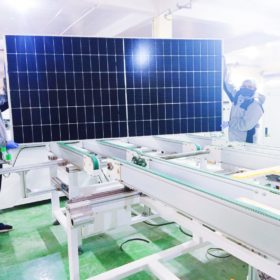
Indian manufacturer Saatvik Solar doubles module capacity to 1GW with new fab
The Indian solar company’s new facility in Haryana is equipped to make mono PERC, half-cut, multi-busbar technology, to produce high-efficiency PV modules with 530-610Wp of power output.
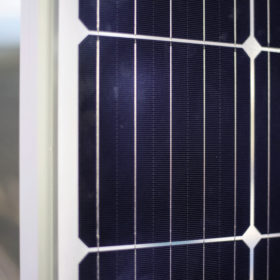
Powering up PERC-perovskite tandem cells
Perovskite-silicon tandem cells offer one of the surest pathways to much higher solar efficiencies, one that has moved close to commercialization in the past few years. Much of the work getting to this stage has naturally focused on developing a viable perovskite top cell. Optimizations to the silicon layer underneath, however, will also be important to the overall device function and efficiency. Scientists in Germany examined five different silicon cell concepts similar to those in mass production today, finding that with a few optimizations these could reach efficiencies up to 30.4%.
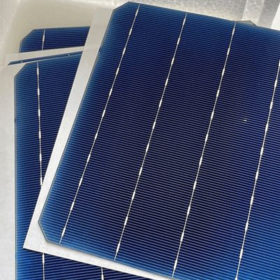
German consortium develops 19.7%-efficient PERC solar cells made of recycled silicon
Led by German research institute Fraunhofer ISE, the consortium has built the solar cells with 100% crystalline silicon recycled from end-of-life photovoltaic panels. The silicon is recycled through a technique conceived by German specialist Reiling GmbH & Co. KG and the Fraunhofer Center for Silicon Photovoltaics CSP.

Photovoltaics for curved surfaces
Researchers in Japan have used heat-shrinkable polymers to laminate organic photovoltaics onto curved surfaces. The process improves efficiency while minimizing damage to photovoltaic components.

US government extends Section 201 tariffs on imported PV panels, cells
The Biden administration has upheld an exclusion for bifacial panels in its new extension of Section 201 tariffs, while ramping up the annual tariff rate quota for cells to 5GW.
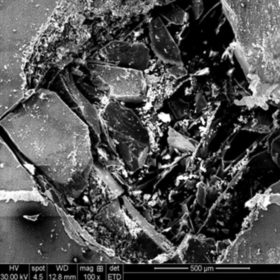
Multiple effects of potential-induced degradation on solar module performance
UK researchers have analyzed the multiple effects of PID on 28 modules at an outdoor testing field. The novel approach considered all multiple PID effects through a comprehensive analysis, which included power losses, hotspots, mm-level defects, and the performance ratio.
