Is it time for the world to start thinking about 1.7C?
A note issued by Norwegian analyst Rystad has hinted it may be time to consider abandoning the 1.5-degree average global temperature rise ceiling agreed upon in Paris six years ago, because the world will never be able to pump out enough solar panels in time.
Chinese PV Industry Brief: Rising wafer prices and a big tracker order
AntaiSolar has secured a 400 MW contract from Ningxia Jiayang Energy and Longi has raised the prices of all its wafers. Elsewhere, GCL New Energy has announced the sale of another 198 MW of project capacity.
Solaria unveils 430 W pure black residential solar panel
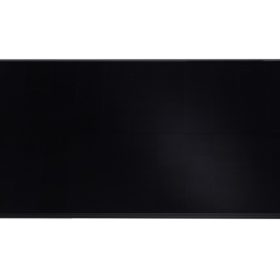
The new residential module of the U.S.-based manufacturer has a power conversion efficiency of 20.40%, a size of 1,076×1,957x35mm, and a weight of 21.3kg. The product is claimed to be compatible with next-generation, module-level power electronics.
Antimony trisulfide solar cell with 5.84% efficiency
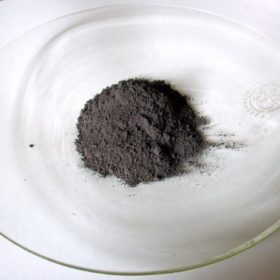
The cell was fabricated by adding a special additive that improves the low crystallinity and high resistivity of the antimony trisulfide film. On top of the improved efficiency, the device showed an open-circuit voltage of 0.62 V, a short-circuit current density of 15.85 mA/cm2 and a fill factor of 59.61%.
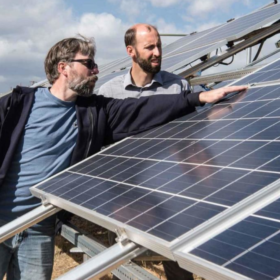
How long do rooftop residential solar panels last?
Multiple factors affect the productive lifespan of a residential solar panel. In the first part of this series, we look at the solar panels themselves.
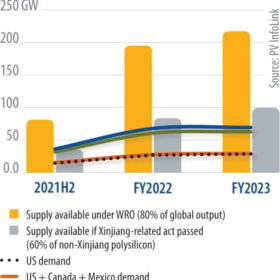
Polysilicon amid international trade disputes
Polysilicon capacity is unable to catch up with rapid capacity expansion in the mid and downstream segments, writes Corrine Lin, chief analyst for PV InfoLink. New polysilicon capacity requires big capex investment and a lead time of more than two years to complete construction and reach full operation. With unbalanced capacity between the upstream and downstream segments, polysilicon prices have been rising since the second half of 2020, with prices for mono-grade polysilicon surpassing CNY 200/kg ($27.40) in June 2021, up more than 250% year on year.

Keeping track of chlorine in perovskite stability
Scientists in Japan delved deep into the crystalline structure of a perovskite solar cell in order to understand how chlorine helps to improve the cells’ stability. By varying the concentration of chlorine in the material they were able to find an optimal level for increased stability, and open new doors on the way to understanding the specific role of chlorine and the mechanism behind the improvement.
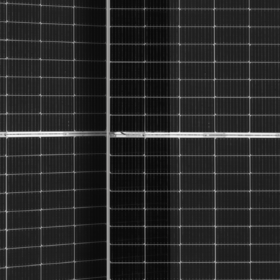
JinkoSolar’s n-type TOPCon cell achieves 24.58% efficiency via hydrogenation treatment
The Chinese manufacturer and the University of New South Wales (UNSW) have improved the average cell efficiency by 0.68% through a post-cell hydrogenation process. The cell’s average open-circuit voltage increased by 7 mV from 696 to 703 mV, and the average fill factor from 82.03% to 83.07%.
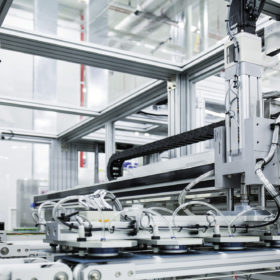
Hanwha Q Cells unveils plan to produce perovskite, TOPCon solar modules
The $1.28 billion plan includes a 3.1 GW production capacity expansion in South Korea, where the company’s solar module capacity will reach 7.6 GW by 2025.

Impact of increasing PV module prices on Indian market
Modules account for a huge percentage of a project’s total costs, and given that independent power providers have lower margins in the Indian solar energy sector, even a small increase in module pricing can put them under more strain.
