
Palestine launches tender for 20 MW solar module assembly line
The line will be used in a new PV panel assembly factory located in the West Bank of Palestine which is set to begin manufacturing activities next year.

The Chinese PV Industry Brief: Tongwei raises solar cell prices
Canadian Solar also reports solid Q2 results, with PV shipments reaching 3.7 GW and revenue totaling US$1.43 billion.
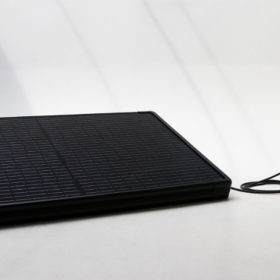
Plug-and-play solar module from the Netherlands
Supersola has developed a 315 W, half-cut monocrystalline PV module. It costs €699 and can be coupled with other two panels to form a 1 kW residential PV system.

Ligand-free perovskite quantum dot solar cell with 9.3% efficiency
The quantum dots used for the device are based on methylammonium lead iodide and are synthesized within a porous silica (SiO2) matrix. Compared to its bulk counterparts, the ligand-free solar cell exhibited a more stable performance.

German manufacturer unveils 10-busbar, half-cell PV modules
Bauer Solartechnik GmbH has released its new 400 W and 405 W BS-M10 PV panel series for rooftop projects.

Australian science agency looks to space to test next-gen PV cell tech
The Commonwealth Scientific and Industrial Research Organisation is pushing the limits of flexible solar PV cells by partnering with Australian startup Space Machines Company to test the technology in space.

Chinese PV Industry Brief: Polysilicon and wafer prices rise again
Trina Solar is also looking to raise financing for its plans to increase PV cell and module capacity.

Indium supply not an issue for CIGS industry
Scientists Ayodhya Tiwari and Daniel Lincot recently spoke to pv magazine about the future of copper indium gallium selenide solar tech, which could play a key role in providing flexible, lightweight products in the building-integrated PV segment.
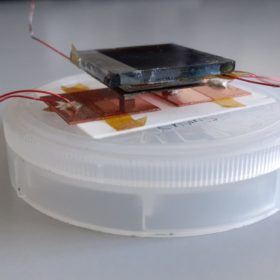
Recovering waste heat from solar cells via a thermoelectric generator
Scientists in Italy have created a hybrid thermoelectric photovoltaic (HTEPV) system based on a thermoelectric generator and a wide-gap perovskite solar cell. The device is able to recover waste heat from the PV unit and produce additional power. According to its creators, this configuration needs large gap cells as these are less sensitive to temperature in terms of efficiency
Current affairs
A new white paper published by Chinese module giant JA Solar examines the performance of new large format modules, and compares products based on the two different wafer sizes, 182mm and 210mm, that are set to dominate the market for the coming years. Thanks largely to the impact of very high currents present in the larger of the two options, JA Solar finds that the 182mm products offer a slight advantage in performance. Further, JA notes that any further increases in size would come with more risk than reward, and calls on the industry to return its focus to reaching higher cell efficiencies and yields through new materials and innovations.
