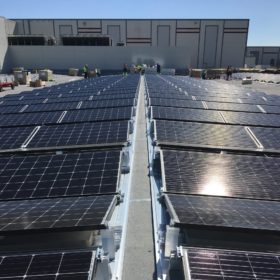
PV modules degrade less in Nordic climates
Norwegian researchers have used a year-on-year approach, considering the combined effect of temperature, humidity, and ultraviolet irradiation, to assess the degradation rate of polycrystalline modules with a temperature coefficient of -0.43%, mounted with an approximately 10-degree tilt, and located in eastern Norway. They found that these modules degrade in the range in the range of 0.1-0.19% per year, which is 0.4% less than panels operating in other climates.
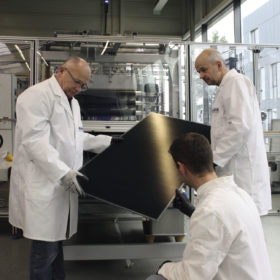
Chinese court upholds laminator patent
German manufacturer Robert Bürkle GmbH has obtained a first instance judgement preventing a rival company from producing equipment that infringes on its patents. The decision of the Intermediate Peoples Court in China is not yet final, and the rival company has already filed a complaint against the ruling.

Indian manufacturer orders 1.2 GW solar production line
Gujarat-based solar panel maker Solex Energy will buy the production equipment from China’s Jinchen Machinery. The company also has plans for a cell line.
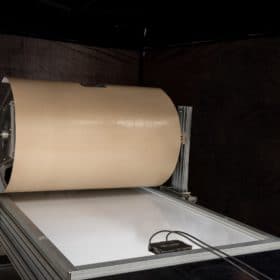
A repair tape for cracked backsheets
Backsheet failures have plagued the industry, causing hefty financial burdens to many asset owners. DuPont has launched a product it says allows for easy repair of modules.
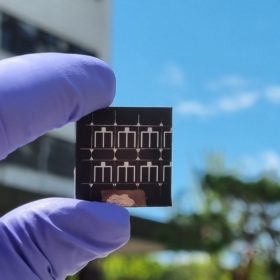
Cadmium-free kesterite solar cell with 9.82% efficiency
Researchers in South Korea have fabricated a cadmium-free heterojunction kesterite solar cell based on a zinc sulfide oxide Zn(O,S) buffer layer. They used a one-minute ammonium sulfide (NH4)2S treatment process for surface cleaning and passivation of the cell’s CZTSSe absorber.

Huawei and Yingli announce smart collaboration
The two brands announced a strategic project at the SNEC solar conference and trade show which will see the establishment of trading and big data centers to help roll-out PV in China.

GCL note holders formally approve debt restructure
The holders of $500 million worth of senior notes which were not settled in late January have accepted the polysilicon manufacturer’s plan to issue fresh three-year investments, after a meeting in Bermuda on Friday.
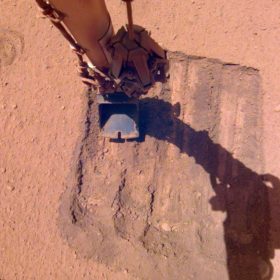
Cleaning solar modules with sand and wind, on Mars
NASA scientists have partially cleaned up the solar modules of the Insight lander operating on Mars, by using grain sands collected nearby and trickling them on the panels during the windiest time of the day. This handmade technique has made it possible, according to them, to increase the PV array’s yield of about 30 watt-hours of energy per ‘sol,’ or Martian day.

Australian research prompts rethink on silicon heterojunction cell production
Defect engineering for silicon heterojunction solar cells has come a long way. But Matthew Wright, a solar researcher at the University of New South Wales, asks whether these proven efficiency gains could be applied more effectively.

The weekend read: PV manufacturing meets big data
As PV manufacturing lines continue to get larger, keeping track of the measurement data that’s vital for quality and process control becomes an ever more herculean task. Flashing equipment supplier h.a.l.m. has developed a software solution that keeps all of this data in one place and provides operators with a real-time view of production line performance and quality. pv magazine caught up with Managing Director Michael Meixner to discuss the latest on big data in PV manufacturing.
