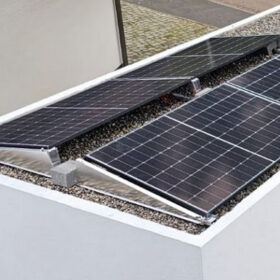
German mounting system provider launches plug in mini rooftop PV system
Germany-based Ilzhöfer is offering plug-in mini PV systems for flat and trapezoidal sheet metal roofs. The arrays feature 450 W bifacial solar panels.
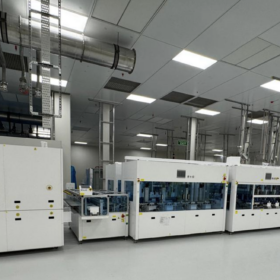
Reliance Industries to start solar cell production in India in Q3
Reliance Industries Ltd. (RIL) is set to commission its solar cell factory in the third quarter, achieving a significant milestone in its goal of building a fully integrated solar manufacturing value chain in India.
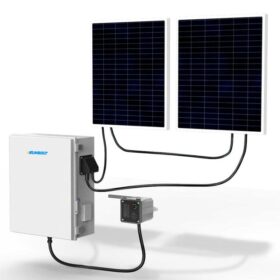
Sunbolt introduces pre-assembled solar ‘backyarder’ kit
The kit includes two 50 W solar panels, a 400 W inverter, and two batteries and powers devices directly with 120V GFCI ports and USB ports.

Tokuyama, OCI begins construction on polysilicon factory in Malaysia
The new manufacturing facility will be located at the Samalaju Industrial Park in Sarawak, Borneo, and will have a capacity of 10,000 MT.

Combined indoor, outdoor testing shows sensitivity to moisture in TOPCon PV modules
Researchers at the Fraunhofer ISE have combined indoor and outdoor testing to understand and quantify degradation processes in TOPCon solar panels. The novel methodology is intended to provide data for validating and improving stress laboratory protocols.
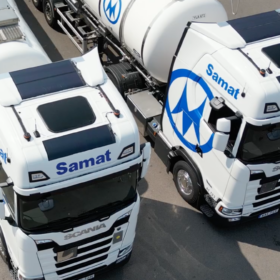
Danish startup offers CIGS-based VIPV solutions for commercial transport
Denmark’s Green Energy Group provides vehicle-integrated PV solutions for road transport customers in Europe and North America. Its PV systems feature copper-indium-gallium-selenide thin film technology in solutions that are designed to extend onboard battery life, cut Co2 emissions, and decrease diesel fuel consumption.

Solestial designing space solar array with shorter lead time
The U.S.-based manufacturer of silicon solar PV technologies for space announced a project that requires it to manufacture, assemble and integrate 1 kW of solar cells and modules into a novel solar wing within a four-week time-period.

Chinese PV industry Brief: Zhejiang Bangjie drops 18 GW factory plan
Zhejiang Bangjie Holding Group has canceled its planned CNY 8 billion ($1.10 billion) solar manufacturing project in Jiangshan, while Arctech Solar has secured a 2.3 GW tracker deal in Saudi Arabia.

RenewSys to ramp up encapsulant capacity to 30 GW
RenewSys will add eight new encapsulant manufacturing lines at its recently commissioned facility in India, increasing its total encapsulant production capacity to 30 GW across 19 lines.
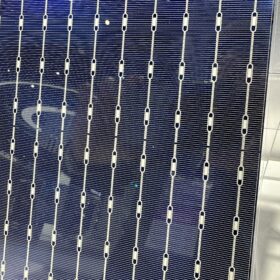
Features driving efficiency complicate solar cell disassembly, recycling
Researchers in Germany have sought to identify the features that may define the “ideal recyclable solar cell” and have found that the recyclability of PV devices is usually in contrast with the efforts of reaching high efficiencies.
