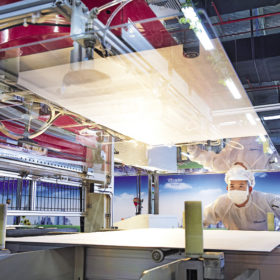
Chinese PV Industry Brief: PV additions hit 18.7 GW in January-September period
Just as the nation posted strong deployment figures, two major module manufacturers reported solid earnings for the nine months to the end of September.

Perovskite-based solar window tech from NREL
NREL’s new solar window darkens in the heat of the sun, producing electricity via embedded perovskite film. The tech is based on formamidinium-based metal halide perovskite, an inherently thermochromic material exhibiting significant optical changes.

REC Silicon could restart poly production at Moses Lake
The Norwegian polysilicon maker has been been frozen out of the Chinese solar market by political tensions between Beijing and the U.S. and mothballed its Washington State production line last year. However, two recent business agreements could change all that.

Plasma passivation process to cut silicon cell costs
Scientists in Saudi Arabia have developed a new passivation process for n-type silicon solar cells, which they say could offer a simpler, lower-cost alternative to current processes used in manufacturing. The group fabricated wafers using this process with promising results, and now plans to integrate the process into a full silicon cell.

Mini perovskite solar panels with 18.4% efficiency
Researchers in Singapore have developed a 6.4 cm2 solar module based on co-evaporated methylammonium lead iodide (MAPbI3). They claim that the panel is a step forward in the industrialization of perovskite mini-modules.
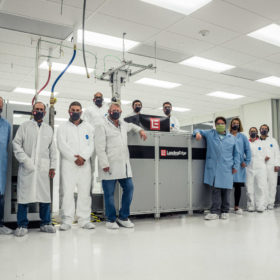
US startup wins $7.6 million in funding for ribbon silicon furnaces
Leading Edge Equipment Technologies falls in the kerfless solar wafer or direct solar wafer category. Its “drop-in” manufacturing tech cuts wafer costs by 50%, drives up commercial PV power by 7%, and reduces manufacturing emissions by 50%. It’s the emissions piece that may be winning over investors.
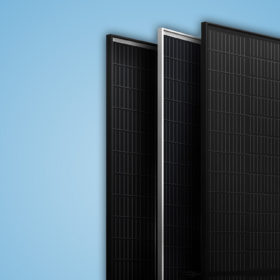
Trina brings 405 W module of Vertex series to the European market
The new module, called Vertex S, is designed for residential and commercial rooftop installations. The efficiency of the module is 21%, one percentage point more than the previous model.
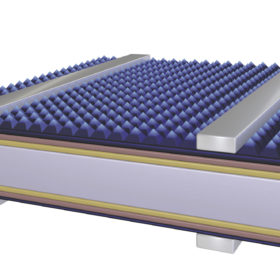
China’s Jinergy bets on heterojunction
China reportedly has 10 GW of heterojunction cell capacity already up and running or under construction. Liyou Yang, general manager at Chinese state-owned manufacturer Jinergy that as costs for the technology continue to fall, more manufacturers in Asia can be expected to make the switch.

Modular raft system for floating PV plants
Qi-energy and Candock have developed a raft-based system for utility-scale floating PV plants, based on special high-density polyethylene “dock cubes” supporting a nonmetallic frame.
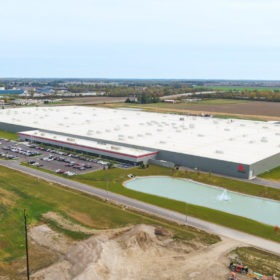
First Solar posts strong Q4 results, announces 445 W module
Strong net sales, 1.6 GW of bookings, plans for a 445 W panel, and environmental recognition for the Series 6 line point to another successful quarter.
