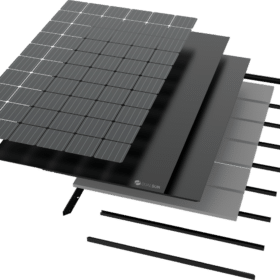
Dualsun unveils 375 W photovoltaic-thermal panel with shingle tech
The panel features an efficiency of 20% and a thermal power of 600 W-thermal per square meter.
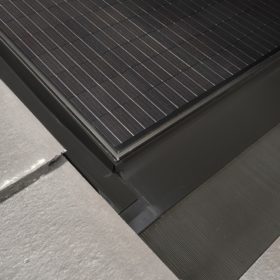
Viridian Solar unveils roof-integrated solar panels with power of 335/340 W
The new devices feature efficiencies ranging from 20.7-21%. The panels are said to be compatible with a wide range of slates and tiles, include special fixings for different batten thicknesses, and achieve the highest fire rating and wind resistance without modifications to the roof.

Baywa re sets up unit to manufacture mounting systems
The new Novotegra GmbH unit will bundle all activities related to the group’s PV mounting structure business.
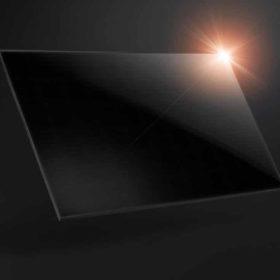
Silfab Solar launches 21.4%-efficient back contact residential panel
The new interdigitated back-contact module comes with power outputs ranging from 370 to 380 W and is the most powerful panel produced by the company to date.

First attempt to fabricate solar cells based on antimony selenoiodide
South Korean scientists have produced a solar cell based on antimony selenoiodide, with a 4.1% efficiency, a short-circuit current density of 14.8 mA cm2, an open-circuit voltage of 473.0 mV, and a fill factor of 58.7%. They claim the cell exhibits excellent stability in humid conditions.

Quantum dot solar cells and the search for stability
In various forms, quantum dot technology has attracted plenty of attention among PV researchers recently. And as efficiencies have crept past the 15% mark, the community is beginning to look at other factors limiting the viability of quantum dot solar cells in a commercial setting. Scientists in Germany examined the degradation mechanisms affecting different quantum dot materials; and suggest a standardization of stability testing to enable comparability of results.
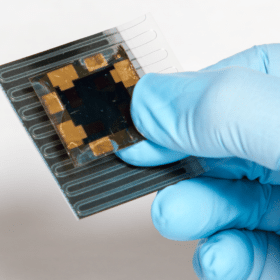
Solliance, MiaSolé hit 26.5% efficiency on tandem CIGS/perovskite solar cell
MiaSolé and Solliance have achieved record performance by optimizing the bandgap and the efficiency of both the rigid semi-transparent perovskite top cell and the flexible CIGS bottom cell.
India joins race to develop high-efficiency solar cells
India’s Ministry of New and Renewable Energy is funding research to develop high-efficiency crystalline silicon solar cells, as well as perovskites.

Silver prices expected to rise by 11% this year
Silver demand for PV production worldwide is forecast to grow to 105 million ounces this year, as overall demand hits an eight-year high. Prices for the precious metal could reach a seven-year high of $30.00 per ounce this year but, according to the Silver Institute, this level is still far away from any critical threshold that would make silver supply for the solar industry problematic.

Chinese PV Industry Brief: Tongwei and Jinko team up, as NEA sets new 2030 targets
China’s National Energy Administration expects renewables to represent 40% of the nation’s energy consumption by 2030, and proposed new targets for local and regional government authorities. On the manufacturing side, Tongwei and JinkoSolar announced plans to deepen their strategic cooperation, and Huadian Group has launched its first tender this year for 7GW each of modules and inverters.
