
PV-powered drone for emergency services
Netherlands-based technology companies Avy and Wattlab have conducted the first test flight of a drone prototype that is planned to be used in medical projects in Africa.
Armor announces 26% efficiency for organic solar cell
The French organic PV specialist has achieved the record efficiency for cells exposed to low light (1000 lux). Armor sees potential in energy-intensive applications.
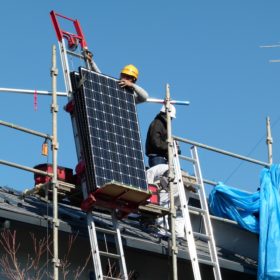
Chinese PV Industry Brief: Record residential solar installs and rumblings in the polysilicon market
The NEA has revealed more than 1.3 GW of solar capacity was added to Chinese rooftops last month, with more than 500 MW of it in Shandong province. While poly maker Daqo was forced to revise down its latest sales forecast it predicted a quick rebound in the current quarter.

UAE revises energy strategy in view of competitive PV prices
Falling solar prices are leading to a new energy strategy for the United Arab Emirates as local energy companies offer unbeatable prices that make green hydrogen increasingly affordable.
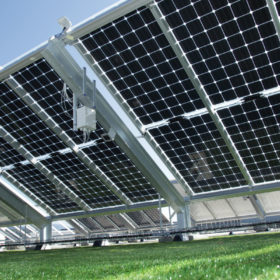
PV module innovations to lower solar costs in coming decade
A new report by Wood Mackenzie suggests that rapid solar module technology innovations in the next decade will lead to significant increases in module power class, better performance and more versatile applications. Technology and lower capex will be key to sector growth, it adds.
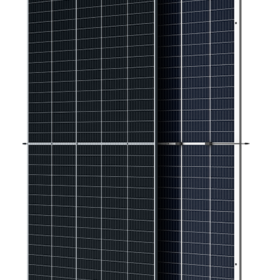
Trina Solar hits 1 GW of ultra-high power module sales
The Chinese giant has reported impressive sales figures for the 500 W+ and 600 W+ products it launched this year.
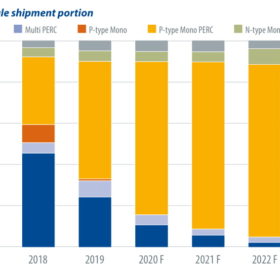
N-type market growth
Several manufacturers recently brought average mono PERC cell efficiency to 22.5%, and efficiencies will likely go beyond 22.6% in the second half of this year. This suggests that p-PERC cell efficiency could be brought closer to that of n-type, making it more difficult for n-type cells to compete in the increasingly challenging market. Taking costs and market conditions into account, most manufacturers have slowed their capacity expansion plans, leading to a gap between actual output and production capacity. PV InfoLink’s Wells Wang sheds some light on n-type trends in 2020.

Hanwha Q-Cells moves to enforce court ruling related to patent infringement
The Korean manufacturer today announced it wants to enforce a ruling made in the regional court of Düsseldorf in June which prohibited rival Jinko Solar from making, selling, importing and distributing products which the court ruled had infringed one of Hanwha’s passivation patents.

Indian company tenders globally for supply of 350 MW of modules
State-run hydropower company NHDC is targeting 340-350 MW of generation capacity in a 1.5 GW tender being held in the state of Madhya Pradesh and needs panels to meet any award it secures.

Chinese PV Industry Brief: Qinghai switches on 2.2 GW, Yingli starts building 5 GW factory
Huanghe Hydropower Development has commissioned 2.2 GW of PV capacity in China’s remote Qinghai province. Yingli, meanwhile, has started to build a new 5 GW solar module factory in Hebei province.
