
A new approach to performance simulation of heterojunction III-V solar cells
Scientists from Italy are proposing a new theoretical approach based on the combination of the scattering matrix method (SMM) with the Hovel method. The new model is said to describe with improved accuracy the propagation of electromagnetic waves in solar cells based on indium gallium phosphide (InGaP), indium gallium arsenide (InGaAs) and germanium (Ge), taking into account the interference effects. In their view, with proper antireflective coating III-V solar cells can reach efficiencies of more than 50%.
The weekend read: The rise of M6
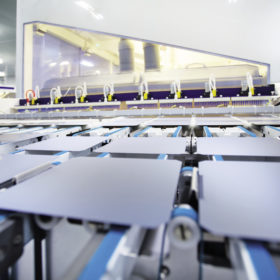
The shift to the larger M6 wafer format could occur faster than many have expected. Promoted heavily by mono giant Longi, the format is said to be a good fit for both cell and module production, while still allowing for relatively trouble-free integration into PV arrays. And it all began in China.
India’s solar cell and module exports grow 157% in eight months
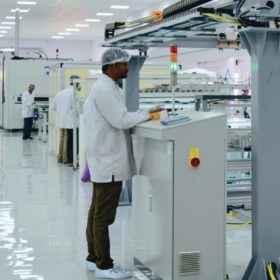
Following a dip in the last fiscal year, the value of cell exports saw a massive surge to an estimated INR13.3 billion from April to November. Exports to the U.S. tripled during the eight-month period as shipments to Turkey and Belgium rebounded to become the next two biggest export markets.
New process could yield 26.6% efficient IBC cells
Researchers in Germany are trialing a host of new processes and materials to develop interdigitated back contact solar cells. A deposition technology named ‘hot-wire’ chemical vapor deposition, is said to provide excellent passivation without the need for treatments such as recrystallization or hydrogenation.

Deal reached to keep Energyra module production in the Netherlands
The Dutch PV manufacturer plans to start production this year after a last-minute rescue package arrived as the company’s equipment was being auctioned off.
Perovskites meet the stability standard
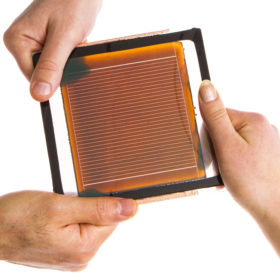
European research group Solliance says its perovskite modules have passed three key industry standard reliability tests: Light soaking, damp heat and thermal cycling. The group said it is the first time perovskite modules of that size have achieved such results and represents a milestone in the technology’s move toward commercialization.

‘China will add 35-38 GW of solar this year’
Power generation statistics released by the National Energy Administration appear to confirm the nation added 12 GW of solar last month. China also deployed another 41 GW of polluting coal-fired power plants last year.

Lead-free soldering in modules: It can be done!
pv magazine’s UP sustainability campaign has investigated the use of lead in PV panels and found, with soldered cell interconnections in particular, viable alternatives are scarce. However, German headquartered manufacturer Opes Solutions has launched a small module for the off-grid market featuring lead-free solder, developed at the request of a customer. We caught up with Opes CEO Robert Händel for a closer look at the module and the challenges and benefits of going lead-free.

Panasonic claims 16.09% efficiency for lightweight perovskite solar module
The device has an area of 802cm² and thickness of 2mm. The manufacturer claims it improved module performance through an inkjet coating method and a reduction in weight by using thin glass substrates.

Breaking news: Zhonghuan Semiconductor up for sale
The body responsible for state-owned assets in the Chinese port city of Tianjin has approved plans to sell all or part of the solar manufacturer to outside investors – although the rumored beneficiary is thought to be partially state-owned itself.
