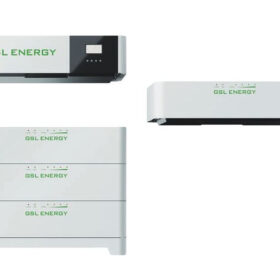
GSL Energy launches all-in-one battery inverters for offgrid applications
China’s GSL Energy has started selling two versions of its new battery inverter, with storage capacities of 10 kWh and 20 kWh. It says the devices have a maximum charging and discharging current of 80 A.
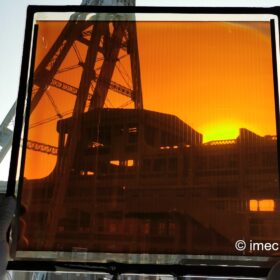
Imec unveils 781 cm2 bifacial perovskite solar panel with 11.9% efficiency
Scientists in Belgium have developed perovskite solar panels with a thermally stable device stack. The encapsulated bifacial panels they created with this configuration were able to retain around 92% of their initial efficiency after 1,000 hours.
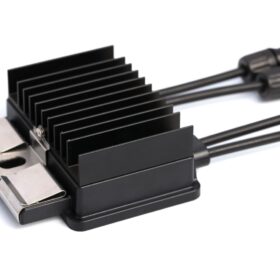
US manufacturer releases new dual solar optimizer
Enteligent, a residential PV solutions specialist, has introduced an optimizer model that can be paired with two solar panels. It claims that it features rapid shutdown and monitoring capabilities.

Copper thiocyanate to eliminate moisture leaks in perovskite PV cells
Indian scientists have replaced Spiro-OMeTAD with copper thiocyanate (CuSCN) as a hole-transporting material in a perovskite solar cell. They say that the new precursor can offer the same efficiency levels, while reducing moisture leakage.
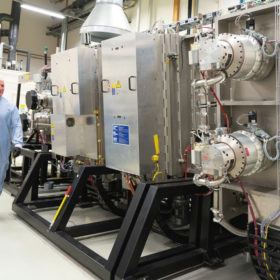
Weekend Read: Industry and researchers in tandem
As efficiency records tumble and devices become more stable, Europe is seeing the beginnings of a race to commercialize high-efficiency perovskite-silicon tandem solar products, reports Valerie Thompson.
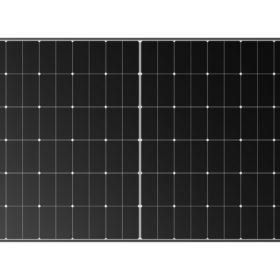
Chinese module prices to fall by 15% from Q4 2022 to Q4 2023, says CEA
Solar module prices will be pressured by rising industrial capacity this year, with capacities doubling in the ingot/wafer stages and potentially quadrupling for polysilicon by 2027, according to the latest PV pricing report from Clean Energy Associates (CEA).
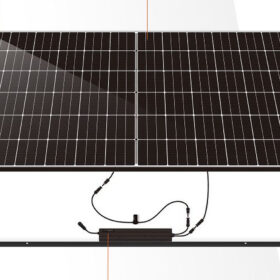
DAH Solar unveils solar kit for balconies, rooftops
China’s DAH Solar has developed a turnkey solar system with a plug-in connection for residential applications. The kit can reach a maximum size of 2,279 mm × 1,134 mm × 32mm and weighs up to 59.8 kg.
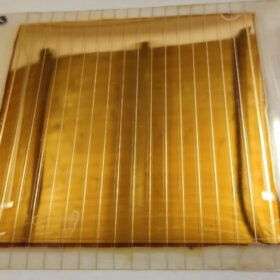
Blade-coated flexible perovskite solar cell achieves 14.08% efficiency
Researchers in Italy have used blade coating to develop a flexible solar cell that does not contain toxic dimethyl sulfoxide. They used the cell to fabricate small solar modules with efficiencies of up to 6.58%.

Australia to earmark $10 billion fund to support clean energy manufacturing
Both houses of the Australian parliament have approved plans to establish an AUD 15 billion ($10 billion) national reconstruction fund to support domestic manufacturing in future industries and reduce the nation’s dependence on imports.

Tesla misses own expectations for Solar Roof deployments
Three years ago, Tesla said it expected to install 1,000 solar rooftop arrays per week, which would have amounted to 156,000 Solar Roofs in that time period. However, Wood Mackenzie reports that just 3,000 have been installed to date.
