
AccelerateEU backs 200 GW storage goal but omits dedicated mechanism
The European Commission’s AccelerateEU energy crisis plan endorses a 200 GW battery storage target for 2030 but proposes no dedicated financing mechanism to reach it, according to SolarPower Europe (SPE), which is calling for a separate EU-wide auction funded by emissions trading revenues.

Tesla launches three-phase Powerwall 3P
The system integrates a battery, hybrid inverter, and home energy management system into a single device. It supports the integration of additional appliances, including heat pumps via SG-Ready interfaces. A connection to Tesla’s proprietary wallbox is also planned.

How to operate PV-driven residential heat pumps under time-varying tariffs
Researchers in the United Kingdom developed a scheduling model for residential heat pumps that reduces electricity costs while maintaining thermal comfort under dynamic tariffs and uncertain rooftop PV generation. It optimizes when to use grid power, PV energy, and building thermal storage.
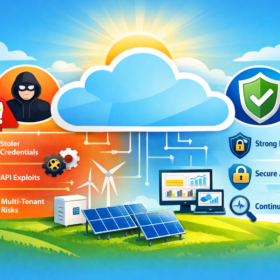
Cyber threats for PV: What are cloud platform and software-as-a-service exploitation attacks and how do they work
Cloud and SaaS platforms are now central to PV plant operations, but their centralization creates a high-impact cybersecurity risk where a single compromise can expose or disrupt entire fleets of installations. Attackers exploit weaknesses like stolen credentials, insecure APIs, multi-tenant flaws, and platform vulnerabilities, making strong identity controls, secure APIs, and continuous monitoring essential defenses.
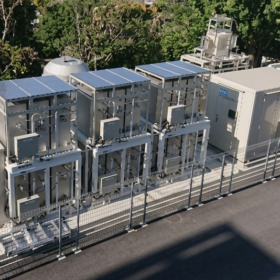
Low-pressure hydrogen bridges seasonal gaps in solar-powered Japanese building
Taisei Corporation has demonstrated that a building can operate entirely on solar power by combining PV generation with a hybrid storage system integrating batteries and low-pressure hydrogen at a test facility in Yokohama. An EMS-enabled setup using lithium-ion batteries and PEM electrolysis balanced short- and long-term energy supply and demand, enabling year-round renewable operation, according to the company.

New metric shows renewables are 53% cheaper than nuclear power
A new metric for assessing total system costs puts a least-cost mix of offshore wind and solar at about €46 ($54.20)/MWh in a future climate-neutral energy system for Denmark. Researchers tell pv magazine that figure is less than half the equivalent cost of nuclear under the same conditions.
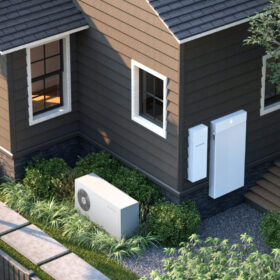
Span and Nvidia to develop AI data centers in your backyard, lowering electric bills
The two companies will develop XFRA, a distributed network of compute nodes connected to homes with smart panels, batteries and optional solar generation, in partnership with Nvidia and homebuilders like PulteGroup,
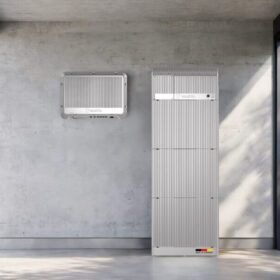
Varta launches all-in-one residential inverter and modular battery
The German manufacturer has launched an integrated energy system combining inverter, storage and energy management in a modular, scalable solution for new and existing PV installations. The system supports AC/DC coupling, backup power and smart energy optimization.

BBDF: German network agency to release BESS grid fee framework soon
Germany’s Federal Network Agency (Bundesnetzagentur) is set to present a framework for future network fees in May 2026, with industry discussions highlighting how these charges could interact with flexible connection agreements and affect battery energy storage system (BESS) returns.

BBDF 2026: Finance, tolling, and getting the merchant balance right
As Europe prepares to roll out 200 GWh of battery storage over the next five years, discussion at the Battery Business & Development Forum 2026 turns to how financing models are rapidly shifting. Bankers, developers and stakeholders shared key pain points with the audience, as well as practical advice.
