
Sharp unveils vehicle-to-home EV charger for PV-powered homes
Sharp has developed vehicle-to-home (V2H) electric-vehicle chargers for PV-powered homes, featuring 6 kW of charging/discharging rated power and an input DC voltage of 340 V. The wall-mounted devices are suitable for indoor and outdoor environments.
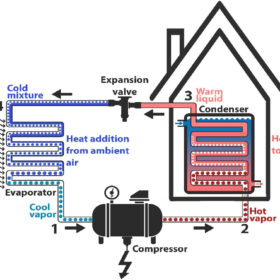
Simulation model to determine coefficient of performance of air-source heat pumps
A Dutch research team has outlined a new method to assess the coefficient of performance of air-to-water heat pumps by considering ambient temperature and relative humidity. The model is based on the equalization of the so-called logarithmic mean temperature difference (LMTD), which determines the temperature driving force for heat transfer in flow systems such as heat exchangers.
The Hydrogen Stream: Wood Mackenzie calls for focus on life-cycle emissions
Wood Mackenzie has urged policymakers and companies to focus on the full life-cycle emissions of hydrogen, while a European Commission has revealed that a European business mission will visit Mauritania in March to explore hydrogen investment opportunities.

Survey highlights fire-detection, suppression issues in battery storage systems
A new Clean Energy Associates (CEA) survey shows that 26% of battery storage systems have fire-detection and fire-suppression issues, while about 18% face challenges with thermal management systems.
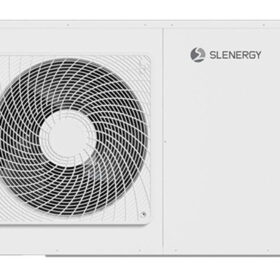
Slenergy releases residential PV system package with heat pump
Slenergy has introduced a new residential PV system package featuring 425 W solar panels, a hybrid inverter, a high-voltage battery, and a Slenergy-branded heat pump. The package incorporates Internet-of-Things hardware for real-time data collection and intelligent control strategies.
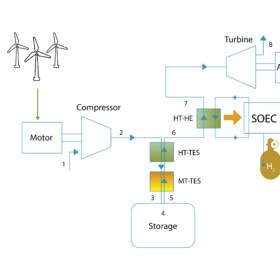
Green hydrogen, power generation tech based on compressed air storage, solid-oxide electrolysis cells
Scientists in Korea have developed a compressed air storage system that can be used as a combined cooling, heat, and power system and provide heat and power to solid-oxide electrolysis cells for hydrogen generation. It showed an overall roundtrip efficiency of 121.2% and over-unity efficiencies in the range of 100% to 120%.
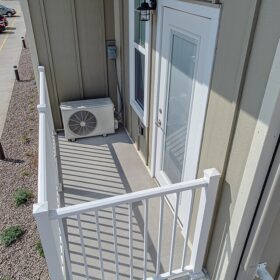
NREL outlines feasibility of heat pumps in US market
The National Renewable Energy Laboratory (NREL) has outlined the feasibility of heat pumps in the US market in a new report. It says installation costs and energy savings prices have changed in relation to climate, heating sources, and types of homes. It says policymakers should further reduce the costs of installing heat pumps to benefit more US households.

Study models optimized use of PV via EV charging facilities
Australian researchers have shown that free electric vehicle (EV) charging facilities using optimized solar systems can lower grid demand in the evening, with implications for broader nationwide efficiencies.

The Hydrogen Stream: Japan expands ties with Germany, South Africa
The Japan Organization for Metals and Energy Security (Jogmec) and Germany’s H2Global Foundation have agreed to cooperate on clean hydrogen, while officials from Japan and South Africa met this week to discuss hydrogen collaboration opportunities.
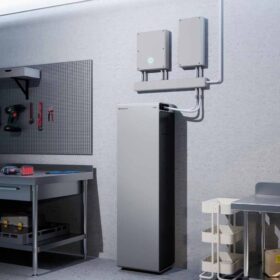
LG launches new residential storage solution
LG has developed two versions of its new enblock E storage system, each with usable energy capacities of 12.4 kWh and 15.5 kWh. It says the two models, sized at 451 mm x 330 mm, can be easily deployed in small spaces.
