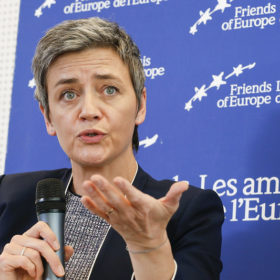
Europe approves €3.2bn to support battery R&D
The European Commission has approved use of funds given by seven member states to back Europe-wide R&D projects across the lithium-ion battery value chain, with the aim of potentially unlocking an additional €5 billion in private sector investment.

India seeks global bids for 1.2 GW of PV-wind projects, plus another 1.2 GW of PV
Solar Energy Corp. of India will sign 25-year power purchase agreements for the projects, which developers will be free to build, own and operate anywhere in India.
BlackRock aims $2.5bn at solar, wind and battery storage
The good news is that the world’s largest fund manager, BlackRock, just closed $1 billion of a record $2.5 billion fund dedicated to solar, wind and energy storage projects. The bad news is that the $2.5 billion fund is a tiny fraction of BlackRock’s $6.96 trillion balance sheet and small change compared to BlackRock’s $17.5 billion investment in coal.
Scottish Power enters PV business
The distribution network operator for central and southern Scotland says it wants to maximize onshore renewables potential by adding solar and storage to its clean energy business. The company said hybrid projects combining wind, solar and storage will become the industry standard in 2021.

South Sudan to get 20 MW/35 MWh solar-plus-storage plant
Egyptian manufacturer El Sewedy Electric has secured a contract from the authorities in Juba to build the $45 million project in Nesitu county. The African Export-Import Bank is financing the facility.
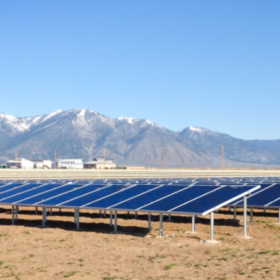
Nevada toys with 1 GW of storage by 2030
In what has been a crazy year for Nevada, the Public Utilities Commission is ending on an equally insane note by proposing 1 GW of energy storage to be deployed across the state by the last day of 2030.
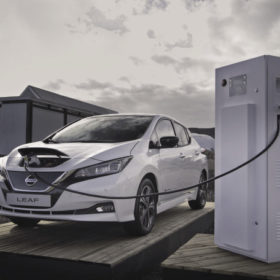
Could EVs start to displace fossil fuel-driven vehicles within five years?
With almost a decade having passed since electric vehicles hit public roads, the price of battery packs has dropped 87% since 2010, according to a report by Bloomberg New Energy Finance. With rising efficiency and evolving supply chains, the market research group suggests cumulative demand will bring prices down to parity with internal combustion engine vehicles by 2024.

Narrowing down 166 billion battery materials
Researchers at the U.S. Argonne National Laboratory have applied a combination of machine learning and artificial intelligence to help narrow down a list of 166 billion molecules that could be used to form the basis of a battery electrolyte. The technique, say the researchers, offers a way to greatly reduce the cost of narrowing down such an enormous data set, while still providing a precise understanding of each molecule and its likely suitability.
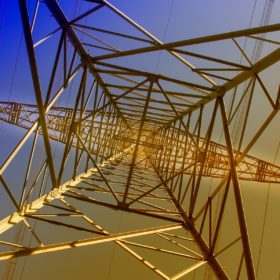
Ofgem’s plan for network charges triggers renewables sector backlash
Ofgem passed its long-awaited, controversial plan for network charges last week, despite earlier warnings against the move. The UK electricity market regulator’s Targeted Charging Review has provoked a backlash in the renewables sector, as many believe that the plan will damage the economics of distributed energy resources and unsubsidized onshore wind and solar development.
Indian government now finalizing new energy policy, says think tank
Aside from an emphasis on energy efficiency, the Indian government’s new energy policy will primarily focus on Indian-made battery cells for electric vehicles, in addition to demand creation initiatives and new incentives.
