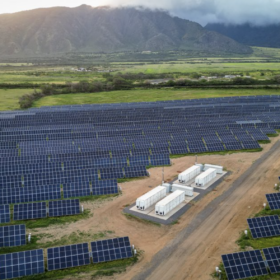
Pexapark logs more than 1 GWh of European storage PPAs in March
War in the Middle East is putting pressure on energy markets and boosting the value of solar and storage power purchase agreements (PPAs), with Europe seeing a surge in activity in March, according to Swiss consultancy Pexapark.
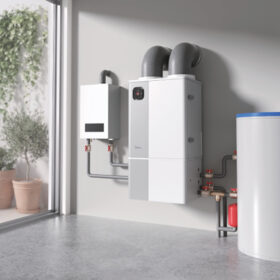
Midea unveils PV-compatible indoor heat pump for space-constrained residential applications
Midea has launched a compact indoor air-source heat pump for retrofit and space-constrained homes. The R290-based system offers up to 4.45 kW output, a coefficient of performance of 4.5 and smart PV-compatible controls.
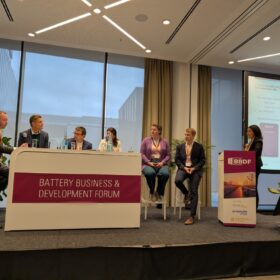
BBDF 2026: How financing standalone vs. co-located projects really works
The “lab” session at Battery Business & Development Forum 2026 made transparent how different stakeholders evaluate and view energy storage projects between standalone and co-located options, and where views diverged.
BBDF: German network agency to release BESS grid fee framework soon
Germany’s Federal Network Agency (Bundesnetzagentur) is set to present a framework for future network fees in May 2026, with industry discussions highlighting how these charges could interact with flexible connection agreements and affect battery energy storage system (BESS) returns.

Can sodium-ion storage drive energy flexibility in France?
France’s Association Environnement Juste has proposed a storage mandate for renewables projects exceeding 10 kWp in order to integrate flexibility at the source. The association argues European sodium-ion batteries could present an economically and environmentally viable solution, capable of stabilizing grids without depending on imported metals.

BBDF 2026: Finance, tolling, and getting the merchant balance right
As Europe prepares to roll out 200 GWh of battery storage over the next five years, discussion at the Battery Business & Development Forum 2026 turns to how financing models are rapidly shifting. Bankers, developers and stakeholders shared key pain points with the audience, as well as practical advice.
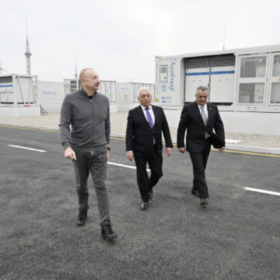
Azerbaijan commissions 500 MWh battery storage project
Azerbaijan President Ilham Aliyev has inaugurated a major battery energy storage system (BESS) project as part of a 500 MWh rollout to strengthen grid stability and support renewable energy integration.

BBDF 2026 Opening Session: Optimism, caution, and grid fees
Investors at the Battery Business & Development Forum (BBDF) 2026 signaled continued confidence in the energy storage market, while warning that regulatory uncertainty, particularly around grid fees in Germany, could affect project economics and investment decisions.

Italy targets 16 GWh storage auction under MACSE scheme
Italy’s energy regulator ARERA has approved a proposal from the Ministry of the Environment and Energy Security to target 16 GWh of storage capacity in the 2029 MACSE auction, while urging caution on final volumes to reflect existing pipeline capacity.

US startup begins manufacturing grid-scale flywheel ESS
SOSV-backed Qnetic is aiming to raise $20 million in 2026. Over the next two years it will work with the National Lab of the Rockies and other partners on field testing and validating its technology across multiple use cases.
