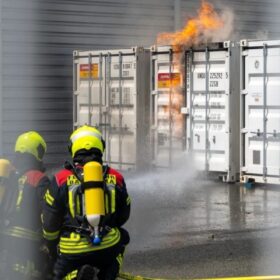
Fire in a battery container causes €700,000 in damage in Germany
The cause of the battery container fire in Thuringia, Germany, is still unclear. The damage caused is enormous.
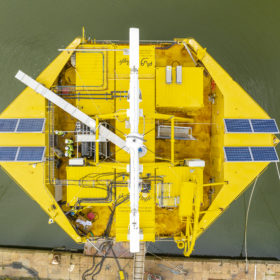
The Hydrogen Stream: PV-wind hybrids cut LCOH by 70%
Portuguese and Italian researchers have shown that the levelized cost of hydrogen (LCOH) is lower onshore and that PV-wind configurations reduce the LCOH up to 70%, while Lhyfe says it has started collaborating on a hydrogen storage project.
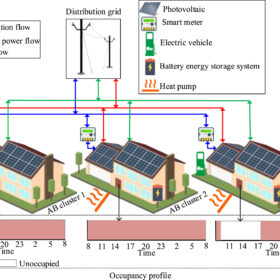
Peer-to-peer energy trading framework for residential buildings
Scientists in the UK developed a controller for B2B trading platform that considers thermal and visual comfort. Their modeling shows that participating in local energy trading increases the robustness of the control systems in residential microgrids in face of uncertainty in the occupant comfort level.
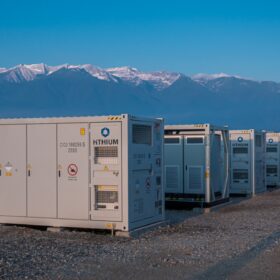
55 MWh battery storage system goes live in Bulgaria
Billed as the largest operating battery energy storage system in Bulgaria to date, the 25 MW/55 MWh facility, developed by Austria’s Renalfa IPP, came online at the start of the month.
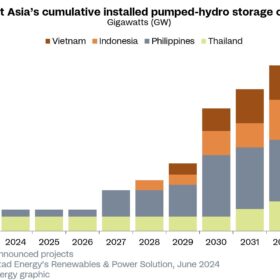
Southeast Asia targets 18 GW of pumped hydro by 2033
According to projections from Norwegian consultancy Rystad Energy, Southeast Asia’s share of pumped storage hydropower is set to increase nearly eightfold in less than a decade – from 2.3 GW today to 18 GW by 2033. Rystad’s figures say that there is currently 2.7 GW of pumped hydro storage under construction, while the remaining 13.3 GW is in various stages of development.
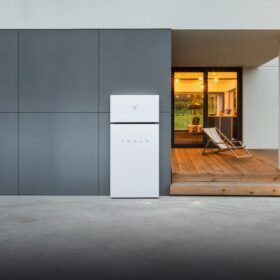
Octopus Energy, Tesla announce service integration in UK, Spain
The partnership between the two energy tech giants will see Octopus install solar powered home battery Tesla Powerwall and Tesla customers utilize Octopus’ range of smart tariffs.

Mauritius seeking consultants for four solar-plus-storage projects
The state-owned Central Electricity Board of Mauritius has opened a tender for consultants to assist with the implementation of four 10 MW solar plus storage facilities.
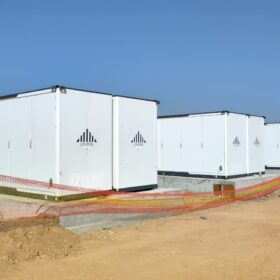
Germany, UK, Ireland, Poland offer best renewables + BESS colocation potential
Market analytics provider Aurora Energy Research has examined the potential for colocation of renewables with battery energy storage systems (BESS) across 12 European countries. It found that Germany, Great Britain, the Ireland I-SEM, and Poland are leading the pack.
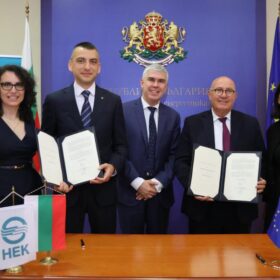
Bulgaria backed by EIB for 1.6 GW of pumped storage
The European Investment Bank (EIB) will conduct economic and technological feasibility studies on two Bulgarian pumped storage hydropower plants due to be operational by 2032. The projects will each add generation capacity of around 800 MW and will both come with a price tag of around €900 ($964) million.
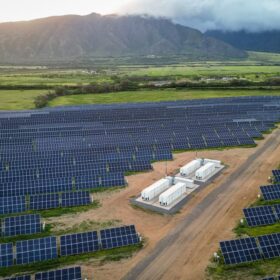
Hawaii’s largest solar-plus-storage facility now operational
The 60 MW Kūihelani solar-plus-storage facility will generate enough electricity for 27,000 homes, with a 240 MWh battery energy storage system.
