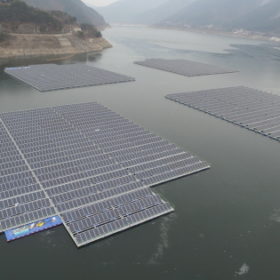
South Korea plans 3 GW of reservoir floating solar by 2030
Korea Rural Community Corp. (KRC) says it plans to increase floating solar capacity on agricultural reservoirs to 3 GW by 2030, from 105 MW currently in operation.
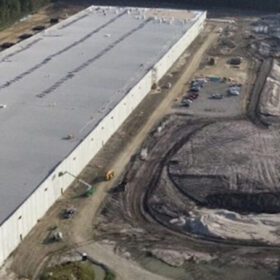
Boviet Solar sells U.S. PV module factory to Indian manufacturer Inox Solar
The divestment, already partially secured via escrow, reflects regulatory pressure from U.S. FEOC policy changes. Boviet Solar also continues negotiations to sell a separate U.S. cell project.

Installed BESS capacity in Spain grew by 589% since 2025 blackout
Some of the consequences of the blackout include a 589% increase in installed BESS capacity in Spain between April 2025 and April 2026, the introduction of renewable participation in voltage control, a greater role for gas in the generation mix, and continued progress on interconnections.

India launches 500 MW renewables tender requiring dispatch via power exchanges
Solar Energy Corporation of India has invited proposals to set up interstate transmission system (ISTS)-connected renewable energy projects for assured peak power supply of 1,500 MWh (500 MW for three hours) under a contract-for-difference (CfD) mechanism.
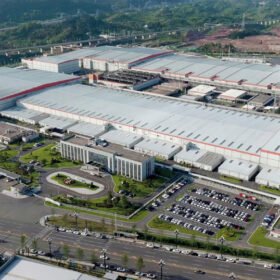
The battery cost disconnect
For years, the battery energy storage (BESS) story has followed a familiar script: costs fall, deployment accelerates, economics improve. Even when cell costs rose and system prices briefly flattened during the 2021-22 lithium price spike, the narrative largely held. Paola Perez Peña, senior principal analyst at S&P Global Energy, examines why the latest jump in lithium prices has only had limited impacts on overall BESS costs so far.
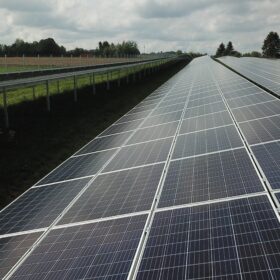
Solar and storage expected to drive 86 GW capacity surge in the U.S. this year
New federal data shows solar and battery assets will comprise nearly 80% of all new utility-scale power additions planned for the U.S. electric grid this year.

China tightens carbon accountability framework, strengthening structural push for renewables
Beijing has introduced a stricter national carbon evaluation system that formally holds provincial governments accountable for emissions reduction and energy transition targets.
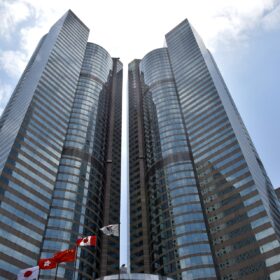
CATL raises $5 billion in share sale, Sungrow files for Hong Kong IPO for the second time
CATL has completed a roughly $5 billion share sale in Hong Kong on Tuesday. Meanwhile, Chinese inverter and battery manufacturing giant Sungrow is making a second attempt at an IPO after its initial listing bid, launched in October 2025, lapsed.

Bangladesh launches 495 MW solar tender
BPDB has launched a tender for 495 MW of grid-tied solar power projects across 10 sites in Bangladesh, with capacities ranging from 25–100 MW and full private investment required. The bid structure, which places land acquisition and financing risks on developers, has drawn investor concerns over bankability and limited project attractiveness.
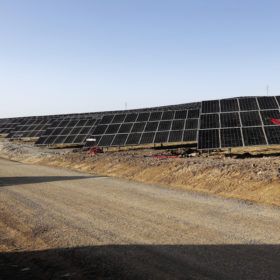
Cox buys Iberdrola Mexico for $4 billion
Cox has acquired Iberdrola México for $4 billion, adding 2,600 MW of capacity and becoming Mexico’s largest private power supplier with a 12 GW renewable project pipeline.
