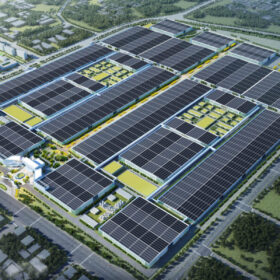
Chinese PV Industry Brief: JinkoSolar appoints new CEO
JinkoSolar has appointed Cao Haiyun as chief executive, while PowerChina has shortlisted 26 suppliers for a 31 GW solar module tender for 2026.
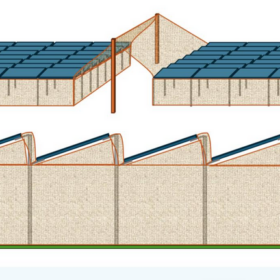
The case for ground-level agrivoltaics
German engineering firm BEC Energie Consult has developed a substructure for low-mounted agrivoltaics designed to provide cost-efficient installation while supporting crop growth and livestock management, with the potential to enhance economic viability.

‘The barriers I encountered were never dramatic, they were cumulative’
This week Women in Solar+ Europe gives voice to Delfina Muñoz, Research Director & Strategic Project Manager at France’s CEA. She says diversity is a catalyst for faster, fairer clean energy innovation. Inclusion, mentorship, and authentic leadership don’t just support people, they build stronger, more resilient teams that power the energy transition forward.
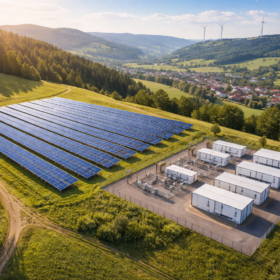
Why technical due diligence is becoming the backbone of Europe’s solar-storage boom
Europe’s hybrid solar-plus-storage projects are growing rapidly, but increasing complexity means treating technical due diligence as a formality is now a serious risk. Rigorous, lifecycle-based technical due diligence (TDD) – covering financial, supply chain, digital, and ESG factors – is essential to ensure project reliability, investor confidence, and a resilient clean-energy transition.
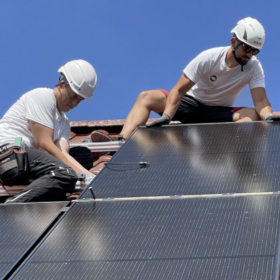
Iran conflict stirs solar demand debate in Germany
Germany’s solar sector is reporting a surge in inquiries following the military escalation between Israel, the United States, and Iran, with E.ON citing a doubling of demand for solar installations. Other industry participants are more cautious, attributing much of the increase to seasonal patterns rather than geopolitical anxiety.
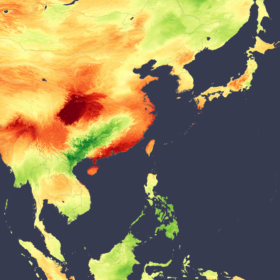
Clean Winter air drives major irradiance surplus across China and Taiwan in February
In a new weekly update for pv magazine, Solcast, a DNV company, reports that February saw a sharp East Asia solar divide, with southern China and Taiwan experiencing record-high irradiance due to clear skies and low aerosols, while maritime Southeast Asia faced heavy rainfall and below-average irradiance from enhanced tropical convection. The surplus in China was driven by atmospheric cleanliness, whereas Taiwan’s boost came mainly from persistently clear days, contrasting with widespread deficits across Indonesia, the southern Philippines, and nearby islands.
Greece receives 12.2 GW of merchant battery applications for 4.7 GW program
Investors have submitted applications for 12.15 GW of utility-scale, standalone merchant battery storage projects in Greece, far exceeding the 4.7 GW the country plans to approve. But with wrestling over financing and key policy details still unresolved, the path to construction remains unclear.
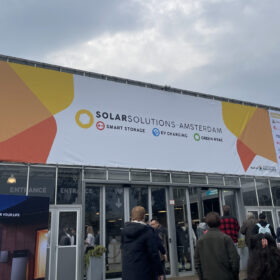
Key takeaways from Solar Solutions Amsterdam
The fourteenth edition of Solar Solutions Amsterdam showcased the latest technologies across solar, storage, electric vehicle charging and green HVAC. This year saw energy storage systems dominate the show floor, ahead of the event’s rebrand to Sustainable Solutions Amsterdam from next year onwards, reflecting the Dutch market’s position as a mature market increasingly focused on flexibility and the connectivity of different technologies within a single system.
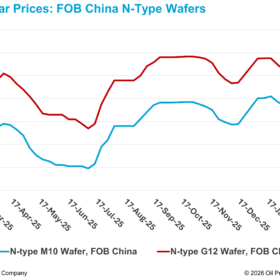
China wafer prices unchanged as resumed purchases fail to lift market
In a new weekly update for pv magazine, OPIS, a Dow Jones company, provides a quick look at the main price trends in the global PV industry.
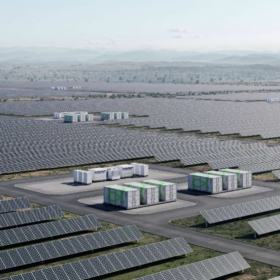
Edify Energy awards EPC contracts for 1.8 GW of solar and storage in Australia
Edify Energy will start construction proper of two massive solar and battery energy storage projects in Queensland, Australia, by mid-year after naming DT Infrastructure as its preferred engineering, procurement and construction (EPC) contractor.
