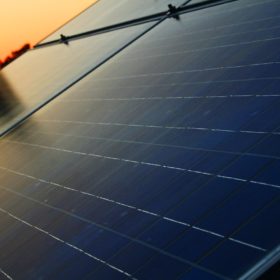
Ramping up renewables now could save Europe €363bn by 2050
Delay, and policymakers will see the carbon emission allowance which would enable us to stay well below 2C frittered away so quickly net zero would have to be reached in 2040, rather than ten years later, when the relevant technology costs will be cheaper.

Uzbekistan shortlists 11 bidders in 200 MW PV tender
The 200 MW solar park will be built in Sherabad, in southeastern Uzbekistan’s Surkhandarya region.
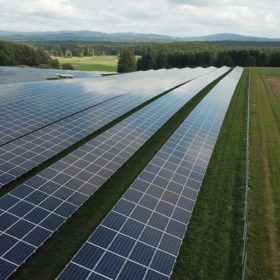
EnBW builds another 300 MW of unsubsidized solar in Germany, ERG announces plans for 600 MW
German utility EnBW plans to build 300 MW of solar at two sites in northeastern Germany, while Italian oil company ERG has entered the German PV market with a 600 MW PV project portfolio.

Biden, the EU and China to usher in ‘golden age’ for solar – Jinko
The company shipped a record 5.1 GW of modules in the July-to-September period and expects to hit up to 19 GW for the year, with ‘nearly 100%’ of its products likely to be based on monocrystalline technology in 2020.

Portugal hits 1 GW milestone
Portugal now has more than 1.03 GW of operational PV capacity, making solar its third-biggest renewable energy source behind hydropower (7.1 GW) and wind power (5.4 GW). However, PV remains the resource with the greatest growth potential in the country.
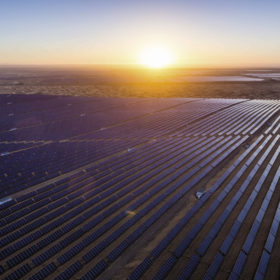
GCL shareholders set for a busy festive period as votes loom on $903m worth of solar project sales
Chinese state entities are now behind five phases of two separate sales deals which, if approved, will transfer more than 1.8 GW of solar generation capacity into public ownership.

Chinese PV Industry Brief: Carmaker BYD unit sales down 20%, Xinyi Glass makes offer for China Glass
BYD more than doubled November vehicle sales but posted a drop in January-to-November business. Xinyi Glass is looking to grow its assets, while GCL-Poly is raising capital.

Germany hits 2 million PV system installations
By the end of October, about 2 million PV systems were operational throughout Germany, according to the German Solar Industry Association (BSW-Solar).
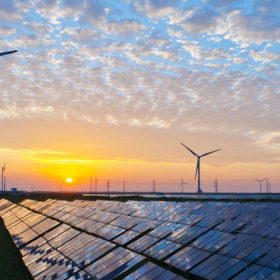
McKinsey: EU slated for 44 GW annual PV additions in cost-neutral path to net-zero
Business analysts at McKinsey & Company have worked the numbers and found that investments into new infrastructure and technologies necessary to achieve the net-zero target will likely be offset by savings in other sectors. Europe’s PV sector could grow to about three times its current size over the next decade.
IEX launches new contracts to enable renewable energy trade on the same day and up to 11 days ahead
The two newly introduced green contracts, daily and weekly, are in addition to already operational intra-day and day-ahead contingency contracts in the green market.
