
Bangladeshi apparel makers opt for rooftop solar
More than 500 factories have registered to make their manufacturing facilities more eco friendly in the garment exporting powerhouse and the nation’s net metering rules offer an obvious step in the right direction.

Consultant plays down Chinese solar fever
The nation is set to have added 40 GW of solar in 2020 and that figure will rise again this year, to 45-50 GW, according to one of the year’s first industry predictions.

Israel’s second tender for solar-plus-storage concludes with final price of $0.0544/KWh
The Israeli government assigned 608.9 MW of PV capacity through the tender and selected seven developers for 33 projects. A storage capacity of around 2,400 MWh will be linked to the selected solar power projects.
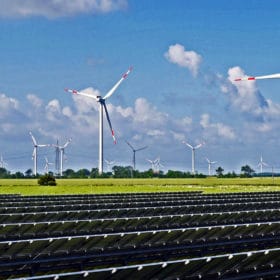
Adani to build 600 MW hybrid wind-solar plant in India
The Indian group secured the project in an auction held by the Solar Energy Corporation of India (SECI). The plant will sell power to the Indian grid at a price of INR 2.41 ($0.033)/kWh under a 25-year PPA.
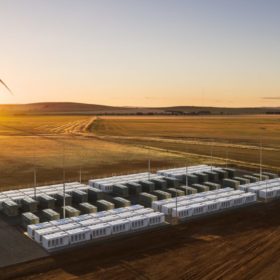
One perfect 100% renewable day in South Australia
As Christmas lights twinkled their last, South Australia’s electricity grid spent a whole day basking in sunshine and turning towards brisk summer breezes. Renewables ruled — a taste of future feasting on clean energy.
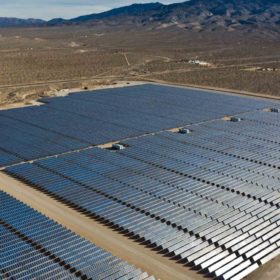
CC&L Infrastructure buys 563 MW EDPR portfolio in US for $684 million
The renewable energy division of the Portuguese power company has concluded a $684 million deal with Canadian investment group Connor, Clark & Lunn Infrastructure for a wind and solar portfolio in the United States.

Bruc Energy, Alter Enersun partner on 550 MW of PV projects in Spain
The companies say the agreement is the result of their complementary strengths and long-term vision of the renewable energy production business in Spain.
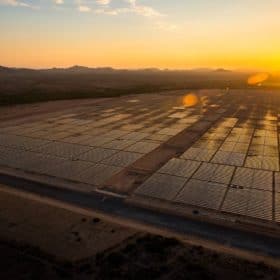
Capital Dynamics takes full ownership of 125 MW PV project in Arizona
Capital Dynamics’ Clean Energy Infrastructure unit previously acquired a 30% stake in Arlington Valley Solar Energy II as part of the acquisition of three PV projects from LS Power in November.
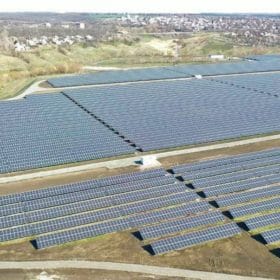
Scatec PV plant goes online in Ukraine
Realized under Ukraine’s feed-in-tariff scheme, the Kamianka plant is expected to deliver some 37 GWh per year and provide clean energy to more than 11,000 households.
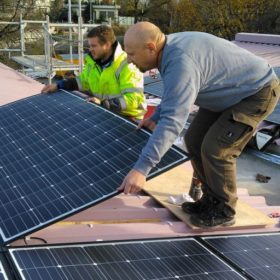
Germany’s solar boom set to continue in 2021
From PV panels to solar storage and solar collectors, rooftop installations grew 25% in Germany this year as due to increasing consumer demand for greater energy independence, lower solar tech prices, improved subsidy conditions and the rising popularity of electric cars. A further increase in solar technology expansion targets is expected to meet climate targets and avoid electricity shortfalls, according to the German Solar Association.
